

The Atlas › The Americas › Chile
Chile
Chile’s wines have outrun the shadow of cheapness — a nation once known for bulk now stakes its claim on a grape that phylloxera never touched.
4
·
100%
·
148K
·
1850s
VARIETIES
Cabernet Sauvignon · Carménère · Sauvignon Blanc · País
On November 24, 1994, in the vineyards of Viña Carmen in the Maipo Valley, a French ampelographer named Jean-Michel Boursiquot made an identification that would reshape how Chile saw itself. The vines he examined—tall, late-ripening, with distinctively twisted flower stamens—were not the Merlot clones that Chilean growers had believed them to be for over a century. They were Carménère, a Bordeaux variety thought extinct in its homeland, lost to phylloxera in the nineteenth century. DNA testing would confirm the finding in 1998. This was not merely the rediscovery of a grape; it was the discovery of a national identity waiting in the soil.
Chile’s vineyards had always enjoyed one decisive geographic advantage—they were isolated from the plague that decimated European viticulture. The Andes mountains to the east, the Pacific to the west, and the Atacama Desert to the north formed a natural quarantine. No phylloxera ever took root in Chilean soil, meaning that ungrafted vines could thrive, and old Carménère plantings persisted as living fossils, unaware of their own rarity. For much of the twentieth century, this isolation meant little; Chile was a quantity producer, a source of bulk wine shipped in containers to distant bottlers. The formal establishment of a Denomination of Origin system in December 1994—the same year Boursiquot walked those Maipo vines—signaled an ambition to transform this identity. From that moment forward, Chile had both the legal infrastructure and the symbolic crop to claim terroir.
The Burden of Being Cheap
The same geographic fortune that protected Chilean vineyards from phylloxera created a problem of perception. For forty years, Chile supplied the New World with reliable, inexpensive wine—the market’s volume play. This was not incompetence; it was strategy. Large producers like Concha y Toro, founded in 1883, built continental scale by exporting at every price point, flooding retail shelves with wines that offered genuine quality at modest cost. The trade organization Wines of Chile still counts over 100 members representing 85% of bottled wine exports, yet consumers in the United States and Europe remained locked in a mental category: “cheap” and “Chilean” had become synonymous.
Premiumization became the industry’s urgent narrative. The turning point arrived unexpectedly: January 23, 2004, at the Ritz-Carlton in Berlin. Thirty-six European wine critics, led by the late Steven Spurrier, blind-tasted 16 wines from France, Italy, and Chile. First place went to Viñedo Chadwick 2000, from Puente Alto in the Alto Maipo district—a wine in only its second vintage, besting Château Lafite-Rothschild 2000 and Château Margaux 2000. Second place: Seña 2001, another Chilean Bordeaux blend from the same valley. The result was not a fluke but a vindication—proof that Chile’s soil and skill could produce wines of genuine complexity and aging potential that stood among Europe’s most celebrated bottles. The Berlin Tasting, replicated annually thereafter, transformed Chile’s standing from regional curiosity to global contender.
The Gift of Isolation
What phylloxera never touched, Chile’s vintners are learning to articulate. The ungrafted vines—Cabernet Sauvignon cuttings imported before the plague swept Europe, Carménère clones rediscovered after a century of misidentification, País and Carignan plants from the southern valleys—carry a directness of expression unavailable elsewhere. Where European vignerons must graft onto resistant rootstocks, introducing subtle variables into the equation, Chilean growers work with original material. The sensory consequence is a transparency that distinguishes Chilean wines at their finest: a fruity directness in Cabernet, a mineral precision in whites, an ability to age without the abstraction that grafting can introduce.
Today Chile positions itself as the premium producer the market had always underestimated. The country’s ambition extends from Alto Maipo’s succession of structured Cabernets to the Carménère renaissance in the Central Valley and the cool-climate potential of emerging regions from the Atacama’s Copiapo Valley to the Bio-Bío’s humid, mineral-rich terroirs. Chile, for four centuries a colonial wine economy, has become an argument about what ungrafted vines and isolation from history’s greatest phytosanitary catastrophe can produce. It is no longer seeking permission to sit at Europe’s table. It has simply built its own.
“If you think you know Chilean wine, think again. Chile is a wine nation transformed.”
— Peter Richards MW, The Wines of Chile
The Regions
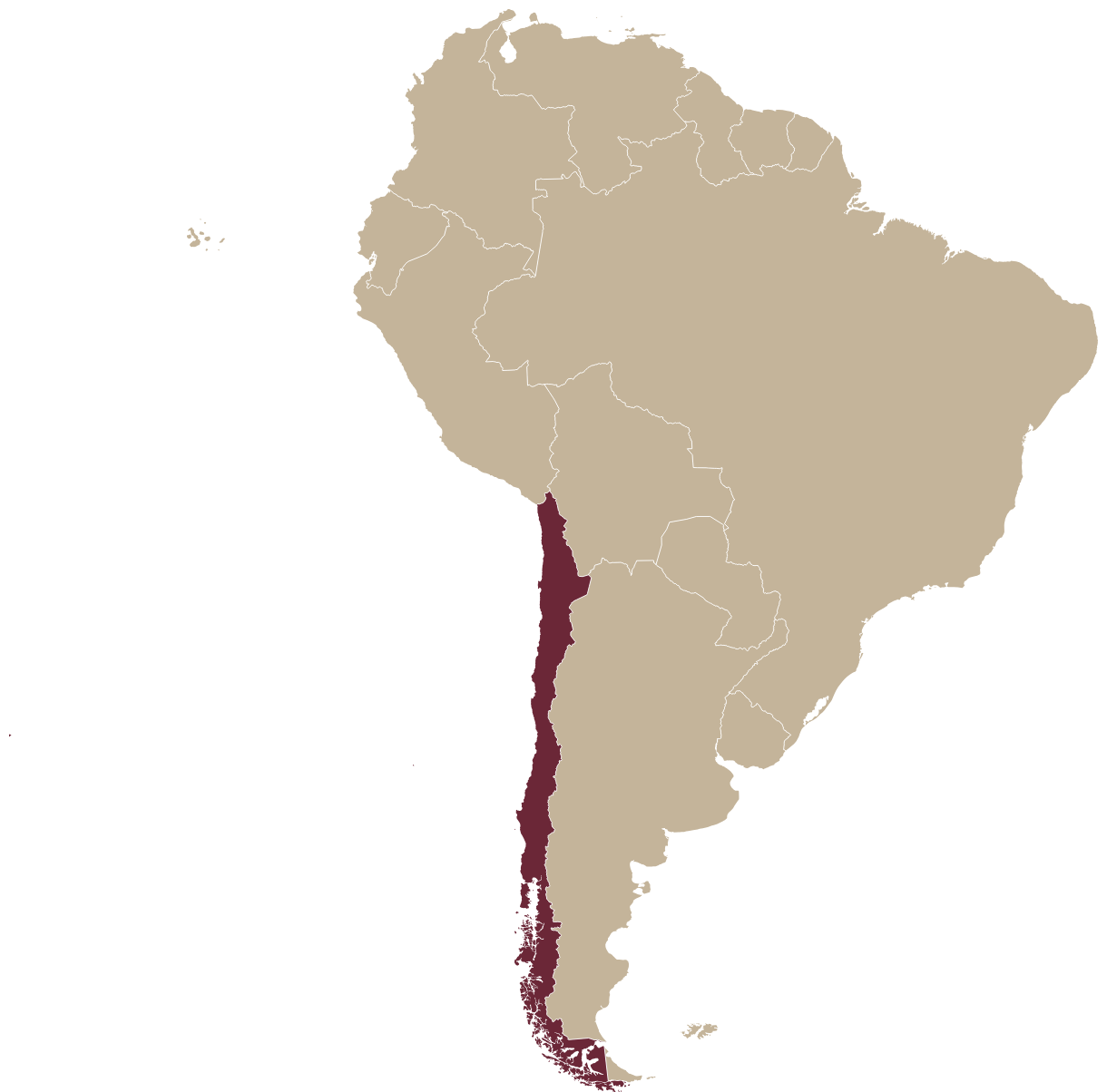
Chile’s wine regions stretch over 1,300 kilometres of latitude, from the arid Norte Chico to the rain-washed forests of the Bio-Bío. Four key areas define the country’s identity — each shaped by its unique interplay of Andes altitude, Pacific proximity, and ancient soils.
Maipo Valley →
Colchagua Valley →
Casablanca Valley →
Itata & Maule →
Last updated: April 2026
Related Stories
The next one arrives Thursday.
Vintage intelligence, producer profiles, and curated cellar picks — before the critics weigh in. Weekly dispatch.