

The Atlas › The Americas › Chile › Colchagua Valley
Colchagua Valley
Where Carménère found its destiny, and a valley outgrew its reputation.
20,000+
·
3
·
Mediterranean
·
1995
KEY GRAPES
Carménère · Cabernet Sauvignon · Syrah · Malbec
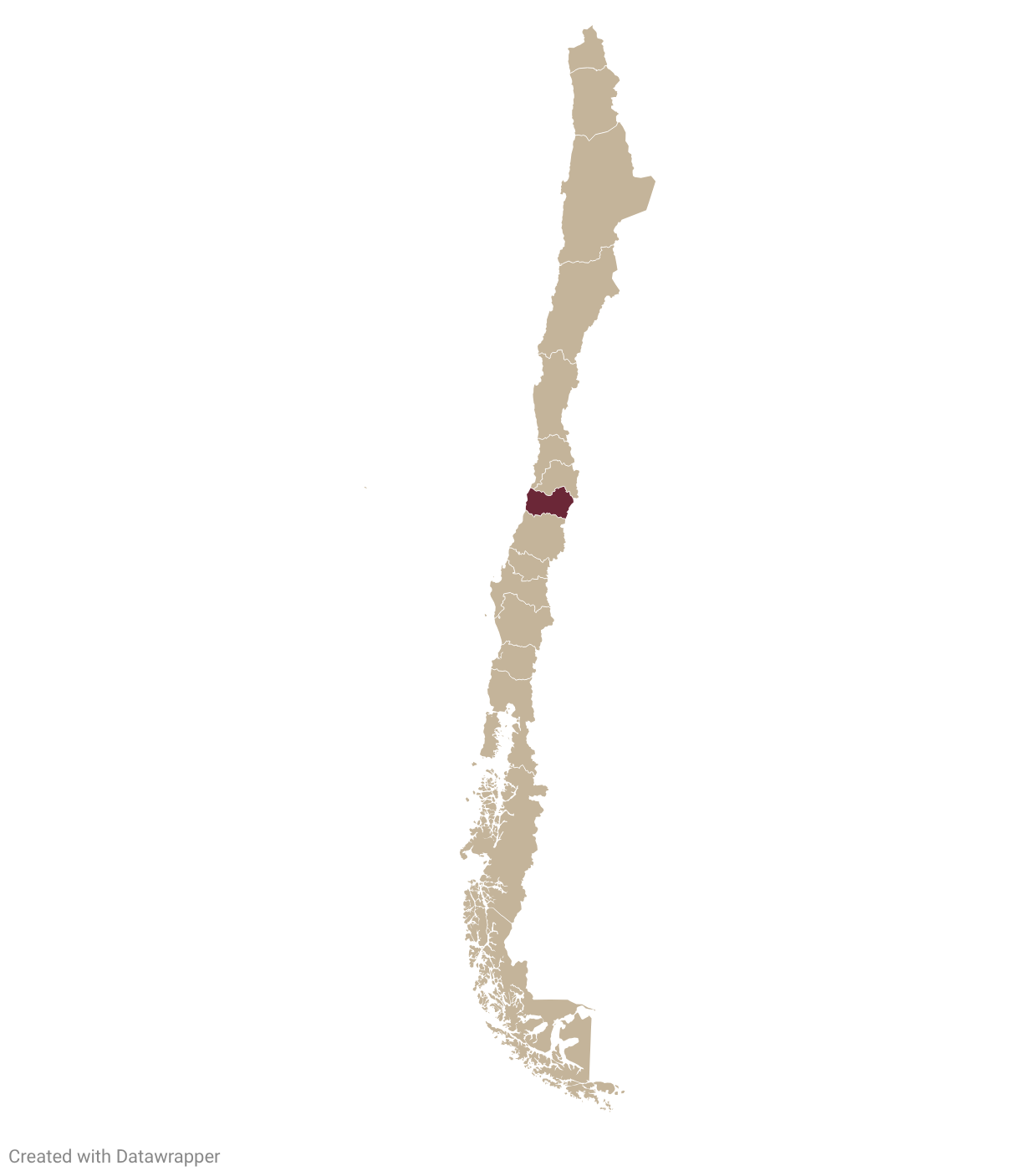
Colchagua Valley lies 100 kilometers south of Santiago, wedged between the Andes and the Pacific’s coastal range, a wine region that arrived late but decisively. For generations, it was bulk-wine country—inland, warm, reliable for churning out anonymous reds. Then, in the 1990s, a new generation of producers began to ask a different question: what if this heat, this granite-based terroir, this amphitheater of mountains could produce wines of distinction, not just volume? The answer came in the form of Carménère, a Bordeaux variety left for dead in most of the world but finding in Colchagua a home where it thrived. Aurelio Montes, the region’s most vocal champion, understood that Carménère’s vegetal green-pepper character—long considered a flaw—was actually the signature of a wine made in the wrong place at the wrong ripeness. In Colchagua’s warm, sunny aspect, with its volcanic clay soils and the altitude variation that pushed into the foothills, Carménère ripened fully, surrendering those herbaceous notes only when it was truly ready.
The region is not homogenous, and that heterogeneity has become its greatest asset. Colchagua spans elevations from near sea-level influence in the west to 800 meters in the Andean foothills, creating microclimates that reward specificity. Apalta, the valley’s most celebrated sub-region, sits in the piedmont zone where granite outcrops and poor, well-drained soils concentrate vine vigor. Lapostolle’s Clos Apalta and Montes’ flagship wines emerge from these thin soils with the kind of structure and aging potential that separate serious bottles from crowd-pleasers. The volcanic soils of the lower valley produce rounder, more immediately approachable Carménère; the granitic mid-slope vineyards yield wines of greater tension and minerality. This spectrum—from ripe and voluptuous to lean and architectural—gives Colchagua depth that no single terroir could provide.
The Carménère Reclamation
Carménère’s vindication in Colchagua is a story of terroir rehabilitation—a grape deemed unsuitable for quality wine suddenly revealing itself as capable of serious expression when planted in the right place. The variety demands heat and sun to ripen fully; it thrives in soils that challenge rather than coddle the vine. Colchagua delivers both. The region’s Mediterranean climate, moderated by altitude and coastal influence, allows Carménère to reach physiological ripeness—the point where sugars and tannins mature together—without the jammy excess that afflicts the variety in warmer, less-structured regions. The result is a wine of remarkable complexity: ripe black fruit and plum with undercurrents of black pepper, tobacco leaf, and the mineral note that tells you the wine has been made with intention, not accident. Casa Silva, the valley’s oldest producer, has spent decades mastering this grape; their Carménères now rank among the most consistent in the Southern Hemisphere.
Yet Colchagua is not only a Carménère story. Syrah has emerged as the region’s second voice, producing peppery, mineral-driven wines from the higher-elevation sites that recall the Northern Rhône more than the Southern Hemisphere. Cabernet Sauvignon performs with distinction in Apalta and the upper elevations, gaining structure and aging potential from the rocky soils and diurnal temperature swings. This diversity of variety and terroir within a single valley is Colchagua’s quiet advantage—the capacity to produce multiple styles of wine, each grounded in a specific expression of place, rather than relying on a single grape to carry the region’s reputation.
Where Granite Meets the Foothills
Colchagua’s greatest structural advantage is its elevation gradient. In the high valleys above 600 meters—what producers call Alto Colchagua—temperature swings widen dramatically. Days remain hot enough for full ripening; nights cool enough to preserve acidity and aromatic finesse. This diurnal amplitude, a hallmark of fine-wine terroirs worldwide, allows producers to craft wines with both power and elegance. Syrah here develops a peppery, mineral-driven profile distinct from warmer regions; Cabernet Sauvignon gains the structure and aging potential that justify cellar time. The lower elevation zones produce rounder, fruit-forward styles better suited to near-term drinking. Together, they position Colchagua as a region of vertical terroir—a place where elevation and exposure matter as much as grape variety.
Colchagua’s transformation from bulk-wine region to fine-wine destination was not inevitable. It required producers willing to invest in quality when the economic incentive favored volume, to resist reductive notions of what Carménère could be, and to understand that a wine region’s reputation grows from the character of the land itself, not from marketing or fashion. Four decades of consistent quality from Montes, Lapostolle, Casa Silva, and others have cemented that transformation. Colchagua is no longer Chile’s anonymous valley. It is, for those seeking wines of authentic terroir expression, one of the Southern Hemisphere’s most rewarding regions to explore.
“We decided to go uphill. We were meant to be crazy in this country planting the hillside. We have a very specific granitic soil, a decomposed granitic soil with a certain component of limestone and clay.”
— Aurelio Montes Sr., Grape Collective
The Sub-Appellations
Carménère’s spiritual home—iron-rich soils and warm Mediterranean climate across three distinct zones, from the Pacific-cooled west to the Andean-elevated east.
DO
Marchigüe
Westernmost cool zone with Pacific maritime influence, where morning fog moderates heat and preserves the acidity and delicate aromatics that distinguish Colchagua’s most elegant reds.
Carménère · Cabernet Sauvignon · Syrah · Merlot
DO
Santa Cruz
Geographic and commercial heart of Colchagua, producing the classical valley expression: full-bodied, fruit-forward reds shaped by warm Mediterranean conditions and iron-oxide soils.
Carménère · Cabernet Sauvignon · Syrah · Malbec
DO
Peumo
Easternmost elevated zone where Colchagua’s warm Mediterranean climate meets cooler altitude, producing wines of broader spectrum—from plush and accessible to structured and age-worthy.
Carménère · Cabernet Sauvignon · Syrah · Cabernet Franc
Last updated: April 2026
Related Stories
Recent articles featuring Colchagua Valley wines, producers, and vintages worth knowing.
The next one arrives Thursday.
Vintage intelligence, producer profiles, and curated cellar picks — before the critics weigh in. Weekly dispatch.