

Jason Haas knelt between two rows of Mourvèdre vines on a warm October morning in Paso Robles, scooped a handful of earth from the vineyard floor, and held it out like evidence. The soil was dark, crumbly, threaded with white root filaments and the faint smell of forest floor after rain. Thirty feet away, across a fence line marking the boundary with a conventionally farmed neighbor, the ground told a different story: pale, compacted, bare between the rows, holding the sun’s heat like concrete. The vines on both sides of that fence received the same rainfall, the same latitude, the same Pacific breeze. The difference was underneath.
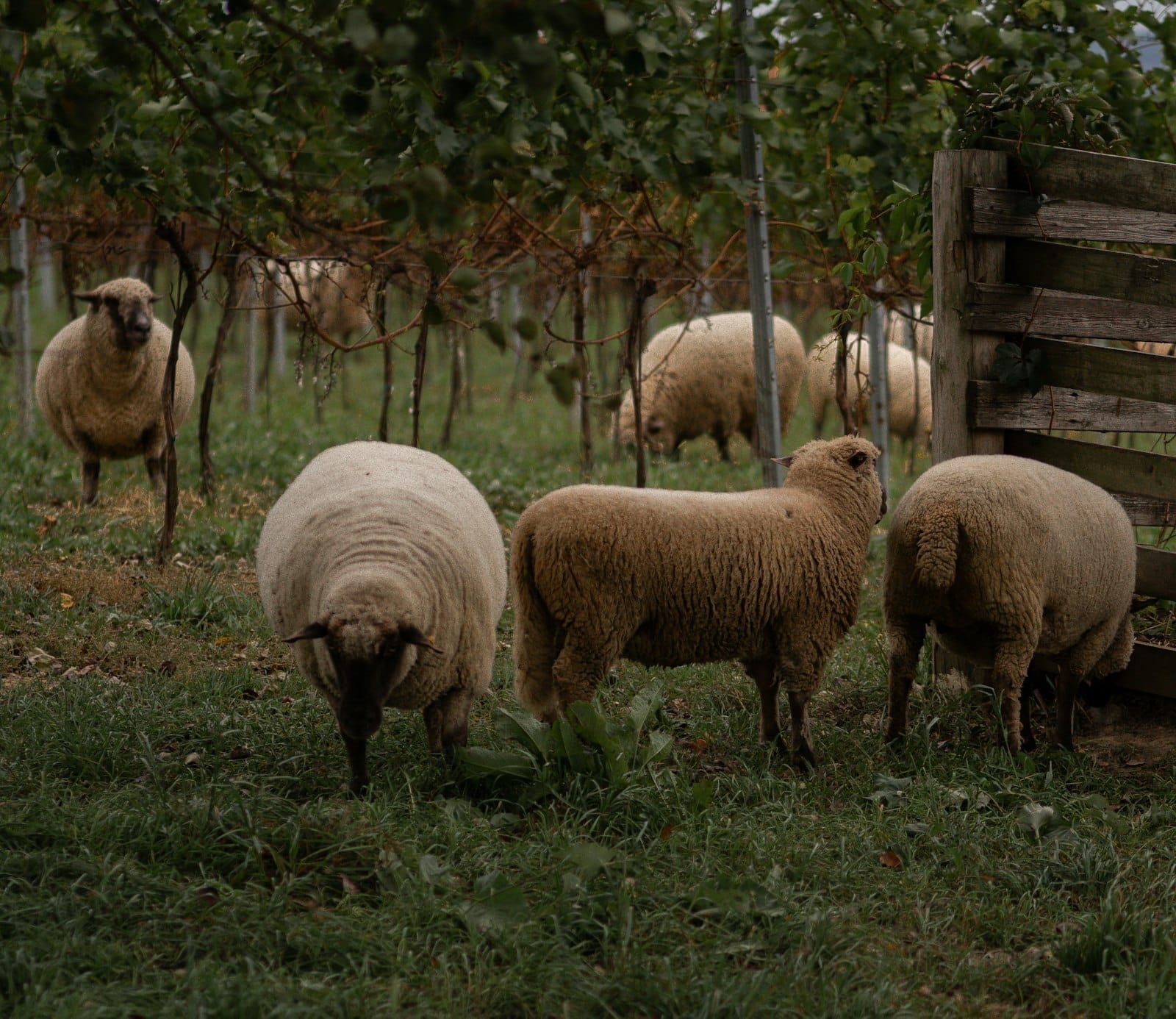
Tablas Creek Vineyard, which Haas runs with his family in California’s Central Coast, became the first winery to earn Regenerative Organic Certified status in 2020. The certification, administered by the Regenerative Organic Alliance, sits atop USDA organic requirements and adds rigorous benchmarks for soil health, animal welfare, and farmworker wages. At Tablas Creek, that means roughly 290 sheep and a handful of alpacas rotating through vineyard blocks to graze cover crops and deposit fertilizer; some 40 owl boxes stationed across the property for rodent control; and an on-site composting operation that returns grape pomace, animal manure, and pruning debris to the soil in a closed loop. The vines, Haas has noted, stay green longer into the growing season than those on neighboring properties. The soil, tested annually, shows rising organic matter and carbon sequestration year over year.
The word “regenerative” has become one of the most contested terms in agriculture, and wine has not been spared the debate. Ask ten producers what it means and you will hear ten definitions, ranging from the rigorously scientific to the conveniently vague. At its core, regenerative viticulture is a set of practices designed to rebuild soil biology rather than simply avoid damaging it: cover cropping between vine rows, composting instead of synthetic fertilization, minimal or no tillage to preserve fungal networks, and the integration of livestock and diverse plant species to create a functioning ecosystem where there was once a monoculture. If organic farming is defined by what a grower removes from the process, regenerative farming is defined by what a grower puts back.
The Arithmetic of Less
The economics of this approach are beginning to produce hard numbers, and they challenge a long-held assumption in agriculture: that yield equals profit. A University of California study examining regenerative vineyards in Sonoma County found that those operations produced approximately 20 to 25 percent less fruit by volume than their conventional neighbors while generating roughly 70 to 80 percent higher profits. The correlation was not between yield and revenue but between particulate organic matter in the soil and the price the resulting wine could command. Healthier soil grew fewer clusters per vine, but those clusters delivered higher sugar concentration, deeper phenolic complexity, and the kind of flavor intensity that justifies a premium in the bottle. Less fruit, better grapes, more money. The arithmetic is not intuitive, but it is increasingly difficult to dispute.
The financial case extends beyond the tasting room. Case studies from California vineyards suggest that regenerative practices can reduce irrigation needs by 30 percent or more within a few years of adoption, a significant saving in a state where water rights can determine a property’s viability. The soil science behind the claim is straightforward: each one percent increase in soil organic matter can improve water-holding capacity by roughly 16,000 to 20,000 gallons per acre, though the actual figure varies by soil type and depth. Cover crops improve infiltration, reducing both drought stress and flood runoff. In documented cases, Australian operators have reported cutting irrigation by as much as half. For vineyards in regions where climate volatility is no longer an abstraction but a line item on the insurance bill, soil health is becoming a form of financial resilience.
A Thicket of Certifications
Yet the regenerative label carries risks of its own. Dozens of wine sustainability standards circulate globally, some estimates placing the count above 70, each with its own criteria, and the resulting thicket of certifications has created more consumer confusion than clarity. The Regenerative Organic Certified program demands USDA organic compliance as a baseline, then layers on soil testing, biodiversity requirements, and social fairness standards including living wages and a prohibition on forced labor. The newer Regenerative Viticulture Alliance, backed by producers including Familia Torres of Spain, has launched an international certification with “Transition” and “Certified” tiers. These are serious frameworks with measurable benchmarks.
Not all labels meet that standard. A Wine-Searcher investigation found that some vineyards certified under California’s Napa Green program continued using glyphosate, the active ingredient in Roundup, despite the program’s sustainability branding. When California drafted its initial definition of regenerative viticulture, critics in the soil science community described it as greenwashing: a framework that borrowed the language of soil restoration without requiring the soil testing to prove it. The gap between rigorous certification and marketing convenience is real, and it matters. A consumer scanning a wine shelf has no reliable way to distinguish a vineyard that has spent a decade rebuilding its microbial ecosystem from one that planted a cover crop for a photo opportunity.
The honest position sits somewhere between the evangelists and the skeptics. The data emerging from operations like Tablas Creek and Robert Hall Winery, which has conducted a roughly 40-acre comparative study of regenerative organic versus sustainable conventional farming, suggests that regenerative practices deliver measurable improvements in soil health, water efficiency, and grape quality. But the return on investment is farm-specific, shaped by starting soil condition, regional climate, and the patience of the owner. There is no universal formula, and the producers doing this work well are the first to say so. As one industry observer put it, the story of regenerative viticulture must be told “with humility and evidence, not slogans.”
What is clear is that the movement has shifted from philosophy to accounting. The vineyard that invests in its soil today is not simply making an environmental statement; it is placing a bet that healthier land will produce better wine at lower input costs over the long arc of a changing climate. The returns are measured not in a single harvest but across decades, in vines that hold their canopy through longer, hotter summers and in soil that drinks the rain instead of shedding it. It is a patient economics, suited to a crop that already asks its growers to think in generations. The handful of earth that Jason Haas held out that October morning was not a symbol. It was a balance sheet.
The next one arrives Thursday.
Vintage intelligence, producer profiles, and curated cellar picks — before the critics weigh in. Weekly dispatch.