

The email arrived in February, addressed to a mailing list of loyal customers at a midtown Manhattan wine shop. The subject line was polite but firm: “2024 Burgundy Allocations — Please Read Before Replying.” Inside, the merchant explained that quantities of white Burgundy had been cut by more than half, that no customer would receive more than two bottles of any single wine, and that several producers had been removed from the offering entirely. Not because the wines were disappointing. Because there were almost none to sell.
The 2025 harvest in Burgundy delivered wines of exceptional quality. It also delivered almost nothing to put them in. Across the Côte de Beaune, some estates reported yield losses of 80 percent, a figure that sounds catastrophic until you learn it was the third small harvest in five years. The accumulated deficit has left cellars thin, allocation lists ruthless, and the global supply of white Burgundy in a position that trade professionals are beginning to describe, with characteristic understatement, as “very tight.”
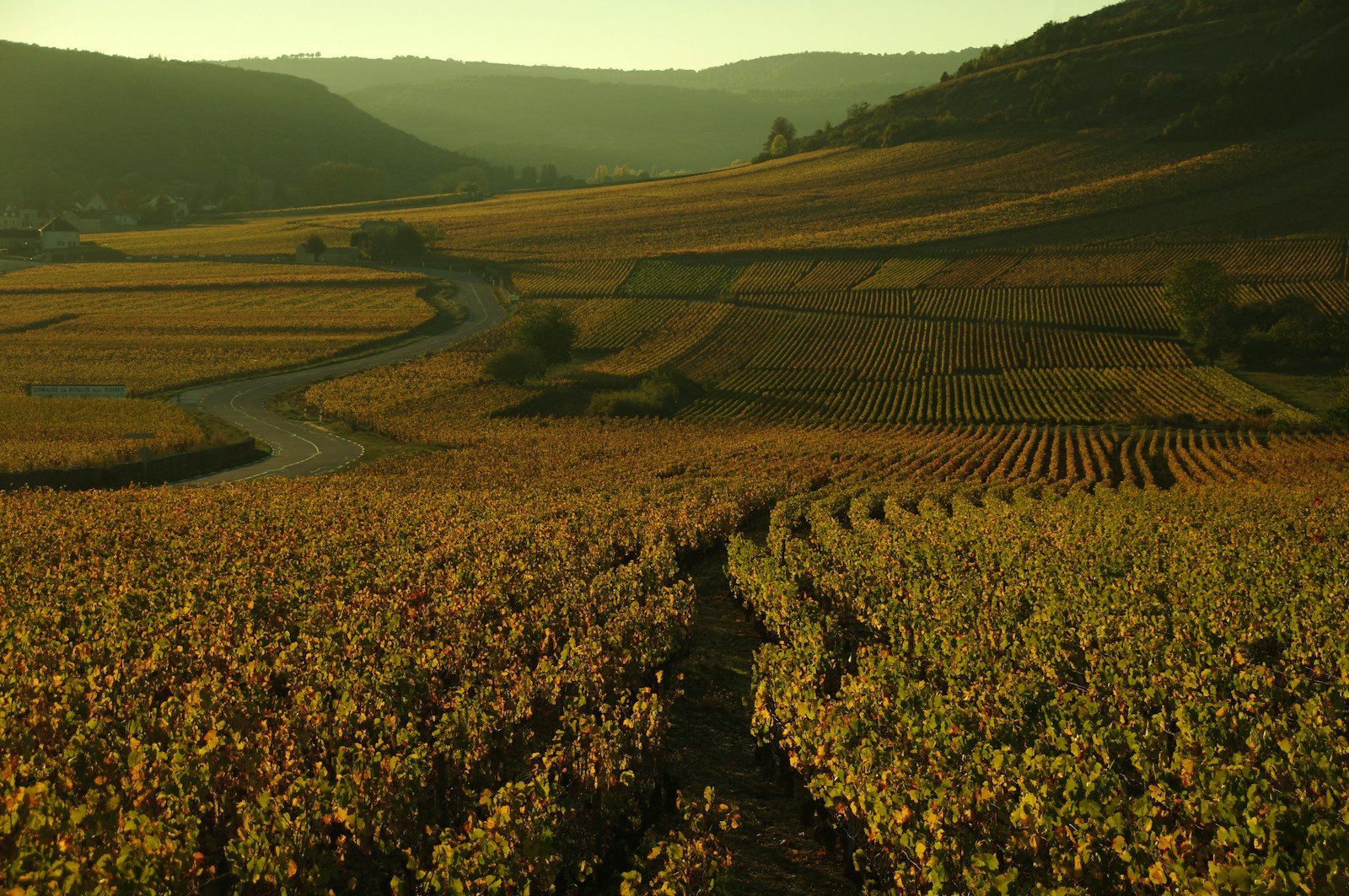
What makes 2025 different from the frost disasters of 2016 and 2021 is the cause. Spring frost has long been Burgundy’s familiar enemy: a late April freeze that descends on budding vines and destroys a season in a single night. Growers have developed defenses against it, from smudge pots and wind machines to the desperate beauty of candlelit vineyards burning through the dark hours before dawn. But the 2025 crisis was not a single event. It began at flowering in late May and June, when unsettled conditions triggered coulure and millerandage, disrupting fruit set before the grapes had even formed. Then came the summer: sustained heatwaves through July and August brought sunburn and dehydration across the region’s most prized white wine vineyards. Higher-elevation parcels, cooled by altitude and airflow, generally fared better. The flat, sun-exposed sites that produce much of the Côte de Beaune’s volume were devastated. There is no smudge pot for 40°C (104°F) heat.
Romain Taupenot, whose family domaine in Morey-Saint-Denis has been making wine for generations, told trade press that climate challenges are “now part of daily life” for Burgundy producers. The phrase is worth pausing over. Daily life. Not an exceptional event, not a once-in-a-generation shock, but the baseline condition of growing grapes in a region whose identity was forged in a cooler century.
The Golden Triangle, Running Dry

The whites have been hit hardest. Meursault, Puligny-Montrachet, and Chassagne-Montrachet, the three villages that form the golden triangle of white Burgundy, all produced modest yields in 2025. Chablis, further north and better insulated from the worst of the summer heat, performed somewhat better but remains constrained by its own sequence of difficult vintages. Producers across the Côte de Beaune have warned of “a serious shortage of whites on the market within two years.” Etienne de Montille, one of Burgundy’s most respected voices, has been more blunt: “Burgundy is going to run out of wine in a year or two.”
The paradox is that the wines themselves are stunning. Producers from Chablis to the Mâconnais have used words like “magnificent” and “exceptional” to describe the 2025 vintage, praising a concentration and purity that only tiny yields can deliver. The fewer grapes a vine carries, the more flavor it channels into each one. The 2025 whites, when they reach the market, may rank among the finest of the decade. There will simply be far fewer bottles to go around.
The Shelf That Will Not Refill
The allocation squeeze is already visible in the trade. En primeur reports for the 2024 vintage, which reached the market in early 2026, described allocations as “severely impacted,” with importers receiving fractions of their usual quantities. If the 2026 growing season brings another disappointment, the pipeline empties further. Restaurants that once featured village-level Burgundy by the glass are quietly shifting to Bourgogne Blanc or removing the category entirely. Retailers are rationing. The days of browsing a shelf of white Burgundy and choosing on impulse are, in many markets, already over.
Pricing, for now, has been more restrained than the scarcity might suggest. Analysts note that Burgundy prices are supported but not spiking. “I don’t think prices will fall,” one Decanter investment report concluded, “but I struggle to see them going up meaningfully.” The exception is at the top: limited-production, high-demand bottlings from producers like Coche-Dury, Roulot, and Leflaive are seeing demand-driven premiums that bear little relationship to the broader market. For the everyday drinker, the squeeze is felt not in dramatic price jumps but in quiet disappearances: the $20 Mâcon-Villages that is no longer on the shelf, the Bourgogne Blanc that has crept past $30.
The substitution effect is already underway. Sommeliers are building wine lists that anticipate Burgundy’s absence, turning to Jura whites for their oxidative complexity, to Greek Assyrtiko for mineral tension, to emerging regions offering compelling alternatives. The search for alternatives is not a rejection of Burgundy; it is an acknowledgment that Burgundy, at current volumes, cannot serve the audience it once did. The question is whether those alternatives become permanent residents on wine lists or temporary guests waiting for the host to return.
Burgundy has survived worse. It survived phylloxera, which destroyed its vineyards in the late nineteenth century. It survived two world wars, which emptied its villages and requisitioned its cellars. It survived the frost of 2021, which cut production by as much as half for some estates and sent prices lurching upward before a partial recovery. It will survive heat. But the drinker who waits for the familiar shelf to refill, at the familiar price, may be waiting for a climate that no longer exists. The white Burgundy you remember is not gone. It is simply rarer than it was, and the distance between what Burgundy can produce and what the world wants to drink grows wider with every difficult harvest. The bottle is still worth reaching for. You may just need to reach a little further.
The next one arrives Thursday.
Vintage intelligence, producer profiles, and curated cellar picks — before the critics weigh in. Weekly dispatch.