

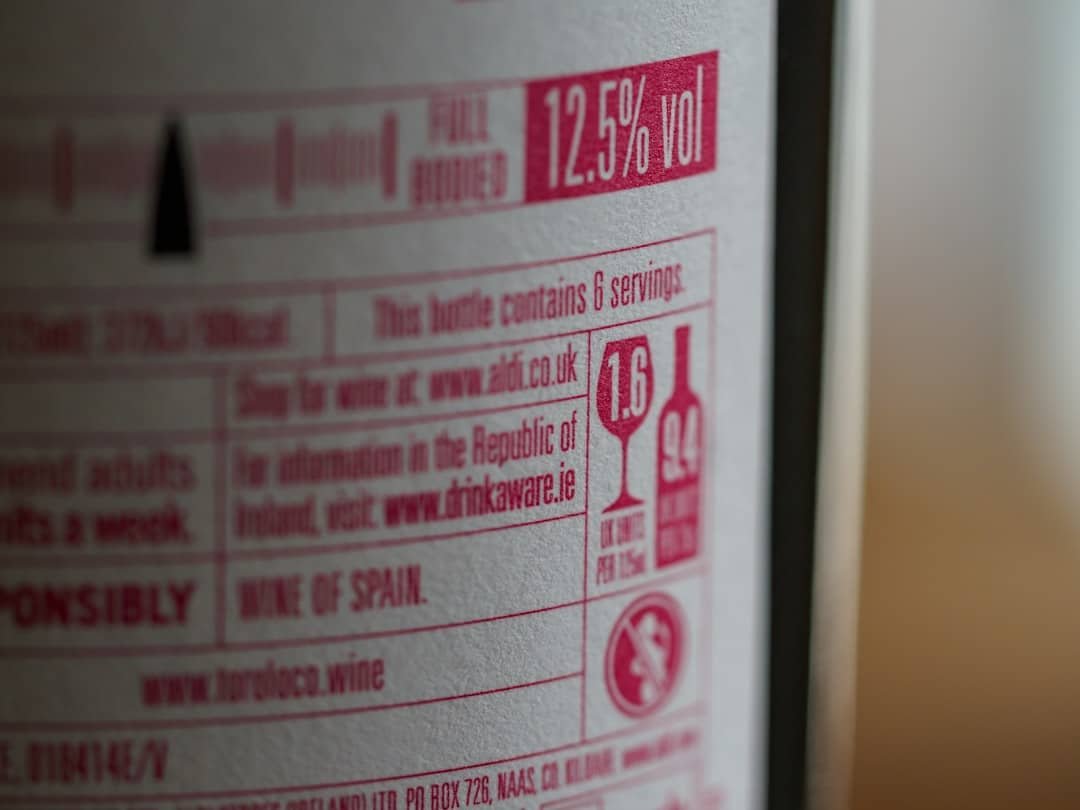
Pick up a bottle of wine at your local shop and turn it around. You will likely find an alcohol percentage, a sulfite warning, and perhaps a geographic origin. Now pick up a carton of orange juice from the next aisle. You will find a full ingredient list, a nutrition panel, calorie counts, sugar content, and allergen information. The disparity is not an oversight. For decades, wine has enjoyed a regulatory exemption from the disclosure requirements that govern virtually every other food and beverage product on American shelves. That exemption is beginning to crack, and the growing demand for wine label transparency has implications stretching from Brussels to Napa.
The 70 Additives You’ll Never See on a Label
The average wine drinker assumes that a bottle contains grapes, yeast, and time. The reality is more layered. Over 70 additives are approved for use in winemaking across major producing countries: sulfur dioxide for preservation, tartaric acid for balance, fining agents such as egg whites, casein from milk, isinglass from fish bladders, and bentonite clay for clarification. Some producers use none of these beyond minimal sulfites. Others rely on a longer list. Until recently, consumers had no reliable way to distinguish between the two, because nobody was required to tell them.
Europe’s Transparency Breakthrough
That changed in December 2023, when the European Union became the first major market to mandate ingredient and nutritional labeling on wine. Under the new regulation, all wines produced and labeled after December 8, 2023 must disclose their full ingredient list and nutritional values, either on the physical label or through a digital link, typically a QR code printed on the back of the bottle. Allergens must still appear in text on the label itself. The rule brought wine into alignment with every other food product in the EU, closing a loophole that had persisted since the bloc’s original food labeling framework was established. It remains the most significant advance in wine label transparency any major market has undertaken.
The regulation has not been seamless. Late changes to EU guidance left Romanian wineries reprinting millions of labels, and smaller producers across southern Europe have struggled with the compliance costs of QR code platforms. Critics argue that moving detailed information behind a smartphone scan creates barriers for older consumers or anyone shopping without a phone. Supporters counter that digital labels offer more space for meaningful context than a two-inch back label ever could. The debate is real, but the direction is clear: transparency is moving forward, not backward.
America’s Labeling Gap
For American wine drinkers, the contrast is stark. The Alcohol and Tobacco Tax and Trade Bureau, which oversees US wine labeling, requires only the “Contains Sulfites” declaration and allergen warnings. There is no ingredient list, no nutritional panel, no calorie count. A bottle of California Cabernet tells you less about its contents than a can of sparkling water. The TTB has periodically considered expanded disclosure rules but has not acted, leaving the United States well behind the EU on wine label transparency.
A Thicket of Certifications
Adding to the confusion is a thicket of voluntary certifications that decorate labels with varying degrees of rigor. “Organic” wine, under USDA rules, means grapes grown without synthetic pesticides and, critically, no added sulfites, a standard so strict that few American producers pursue it. The EU’s organic certification is slightly more permissive on sulfites, which means a wine labeled organic in France may not qualify as organic in the United States. “Biodynamic,” certified by Demeter International, goes further still, requiring holistic farming practices that account for the entire vineyard ecosystem, including planting schedules aligned with lunar cycles and on-site compost preparations. Then there is “sustainable,” the broadest and most ambiguous category, encompassing programs like SIP Certified in California and LIVE in Oregon, each with its own standards covering environmental, social, and economic practices. There is no single universal definition of sustainable wine.
The result is a landscape where good intentions collide with consumer bewilderment. Research from the Wine Market Council suggests that only about a third of American wine consumers report understanding what “biodynamic” means, and fewer still can articulate how it differs from “organic.” Many assume “sustainable” covers the same ground as both. The seals on labels are meant to signal virtue, but without baseline literacy, they risk becoming decorative.
The Informed Glass
What should a thoughtful wine drinker make of all this? First, recognize that the absence of a certification does not signal lower quality. Many of the world’s finest producers farm organically or biodynamically in practice but decline to pursue formal certification, citing the cost, the paperwork, and a philosophical resistance to reducing complex farming decisions to a logo. Domaine Leroy in Burgundy, one of the region’s most celebrated estates, has practiced biodynamic viticulture as a foundational philosophy rather than a marketing decision. Countless smaller estates across Italy, Spain, and the south of France follow similar principles without ever printing a seal.
Second, look for the QR code. If you are buying a European wine produced after 2024, that small square on the back label is your portal to ingredient and nutritional information that was invisible a few years ago. Scan it. The platforms behind these codes are still evolving, but the information is there, and using it sends a signal to producers and regulators alike that consumers care about what is in the bottle.
The wine industry has traded on mystique for centuries, and there is genuine beauty in that. The romance of terroir, the generational knowledge of a cellar master, the quiet alchemy of fermentation: these are things that resist reduction to a data table. But mystique should be a choice, not a default imposed by regulatory gaps. The push for wine label transparency is not about stripping wine of its poetry. It is about ensuring that when you raise a glass, you know what you are raising it to. The label is changing across the Atlantic. The question is how long it will take for American shelves to follow.
The next one arrives Thursday.
Vintage intelligence, producer profiles, and curated cellar picks — before the critics weigh in. Weekly dispatch.