

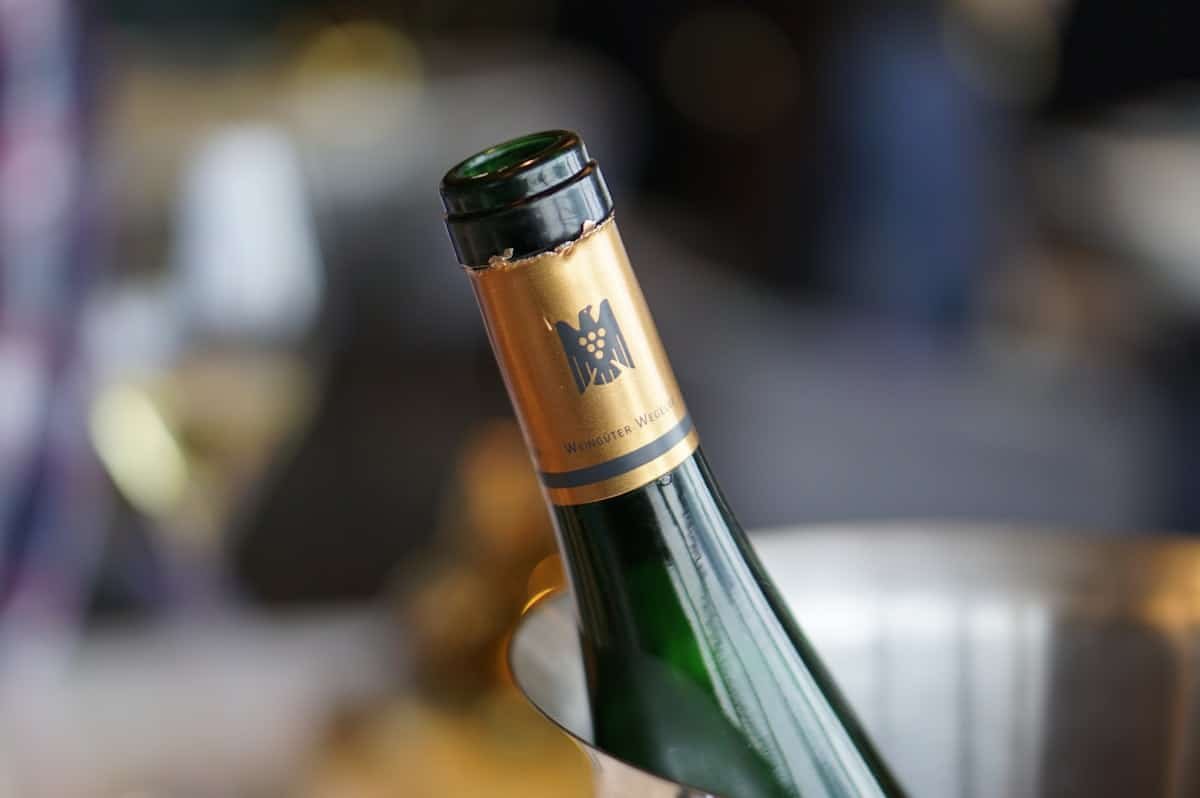
The bottle is Gamay, from Fleurie, bought on a whim at a shop with good taste and no pretension. The evening is warm. The instinct is obvious: put it in the fridge for twenty minutes. But somewhere between the wine rack and the kitchen, another voice intervenes: the one that learned, early and authoritatively, that red wine goes on the counter. Room temperature. Always. Chilling red wine, that voice insists, is a mistake.
That voice is right about a lot of things. This is not one of them.
The Rule That Wasn’t Made for Your House
The phrase “room temperature” has been applied to red wine for centuries, but the room in question was not your kitchen. It was a stone-walled European interior, heated at best by a fireplace in winter, cooled naturally by thick masonry in summer: the kind of room that settled, by habit and architecture, somewhere around 60 to 65 degrees Fahrenheit.
The French had a word for what happened next. A wine brought up from a cellar running at 50 to 54 degrees was said to be chambré, gradually brought to room temperature before serving. The nineteenth-century lexicographer Émile Littré documented the practice around 1877: the move from cellar to chambre, from 10 or 12 degrees Celsius to perhaps 16 or 18. Not warm. Just less cold.
Modern central heating has quietly erased the distinction. The average home in North America or northern Europe now sits closer to 70 to 75 degrees. Kitchens run warmer still. The rule was written for a different room; the room changed, and the rule simply didn’t follow.
What the Heat Is Doing
When a red wine is served too warm, three things happen, and none of them are good.
The first is in the tannins. These structural compounds, responsible for that particular dryness and grip at the back of the palate, behave differently at different temperatures. Cold tightens them, makes them feel sharp and angular; warmth softens them. But above a certain threshold, roughly 65 to 68 degrees Fahrenheit, the warmth stops helping: the texture flattens, the wine loses its structural definition, and what should feel rich begins to feel heavy.
The second is in the aromatics. Temperature governs how readily scent compounds leave the surface of the wine and reach the nose; at higher temperatures, more of them do. The catch is that this process, past a point, becomes self-defeating. The esters and terpenes responsible for red fruit and floral notes dissipate quickly above 68 degrees. What was vivid and bright becomes stewed. What smelled of cherry and dried rose begins to smell of jam.
The third is in the alcohol. Ethanol becomes more volatile as temperature rises. Above 65 degrees, it begins to activate the same receptor that responds to physical warmth, which is why a red wine served too warm can taste “hot” even at a moderate alcohol level. The wine hasn’t changed. The temperature is telling you something.
The practical implication is clear: chilling red wine to somewhere between 58 and 65 degrees Fahrenheit is the correct approach for most everyday bottles. Cooler than the countertop, warmer than the refrigerator.
The Reds That Are Asking for It
Not every red wine wants to be chilled. A young Barolo, structured by high tannins and already demanding patience, will feel rigid and austere at 55 degrees; it needs warmth to open. Cabernet Sauvignon, Syrah, Bordeaux-style blends with significant extraction: these wines are better served at the low-to-mid sixties, not below. Cold amplifies tannins that haven’t yet learned to soften.
But there is a whole category of red wine for which chilling red wine is not a compromise; it is the point.
The principle is simple enough to carry with you. Low tannins, high natural acidity, fruit-forward aromatics, and minimal oak treatment: when these conditions are present, a colder serving temperature doesn’t strip the wine of complexity. It concentrates it. The fruit becomes crisper, the acidity more refreshing, the wine more alive.

Gamay from Beaujolais is the canonical example: crunchy red fruit, bright acidity, negligible tannin, often made using carbonic maceration, a technique in which whole grape clusters ferment in a carbon dioxide environment, producing particularly vivid, approachable wines with a lifted, candy-snap freshness. Serve it at 54 to 58 degrees. The glass sweats. The wine is better for it.
Frappato, from southeastern Sicily, follows the same logic. Its aromatics, strawberry and pomegranate with a persistent snap of white pepper, become more precise when cold, not less. Nerello Mascalese, grown on the volcanic slopes of Etna, is delicate and floral and mineral; it lives at cellar temperature, not counter temperature. Un-oaked Pinot Noir, particularly from cooler regions, makes a compelling case for a slight chill: lighter cherry fruit, silk texture, enough structure to hold at cooler temperatures without the oak tannins that typically need warmth to feel generous.
Grenache in its lighter expressions, from Provence or the Sierra de Gredos in Spain, rewards time in the refrigerator. So does Schiava, from Alto Adige in northern Italy, where cherry-candy aromatics and an alcohol level that often hovers around 11 percent make a good argument for treating the wine more like a white than a red. Pineau d’Aunis from the Loire Valley, zippy and spiced and often around 11 percent, is practically purpose-built for a bucket of ice.
The Twenty-Minute Correction
The method for chilling red wine is not complicated. For light reds like Gamay, Frappato, or Schiava, forty-five to sixty minutes in the refrigerator is enough. For medium-bodied options with a bit more structure, thirty to forty minutes. If time is short, a bucket of ice and water drops a bottle to cellar temperature in fifteen to twenty minutes; it is more reliable and even than the freezer. The freezer works, but set a timer: fifteen minutes is the limit before the chill starts working against you.
The target is not ice-cold. It is cellar-cool. Somewhere between 52 and 58 degrees for the lightest reds; 56 to 62 for something with a bit more body; 60 to 64 for a lightly structured Pinot Noir or Grenache. Even full-bodied wines that don’t benefit from a serious chill are better at 62 to 65 degrees than at the modern kitchen temperature.
Put the Gamay in the fridge. Give it twenty minutes. Pour it into a glass cool enough that it holds the temperature just long enough to matter, and notice what happens to the fruit: how it sharpens, how the acidity lifts, how the wine stops being the thing left dutifully on the counter and becomes, instead, the thing wanted on a warm evening.
The rule wasn’t wrong when it was written. It was just written for a room that no longer exists.
The next one arrives Thursday.
Vintage intelligence, producer profiles, and curated cellar picks — before the critics weigh in. Weekly dispatch.