

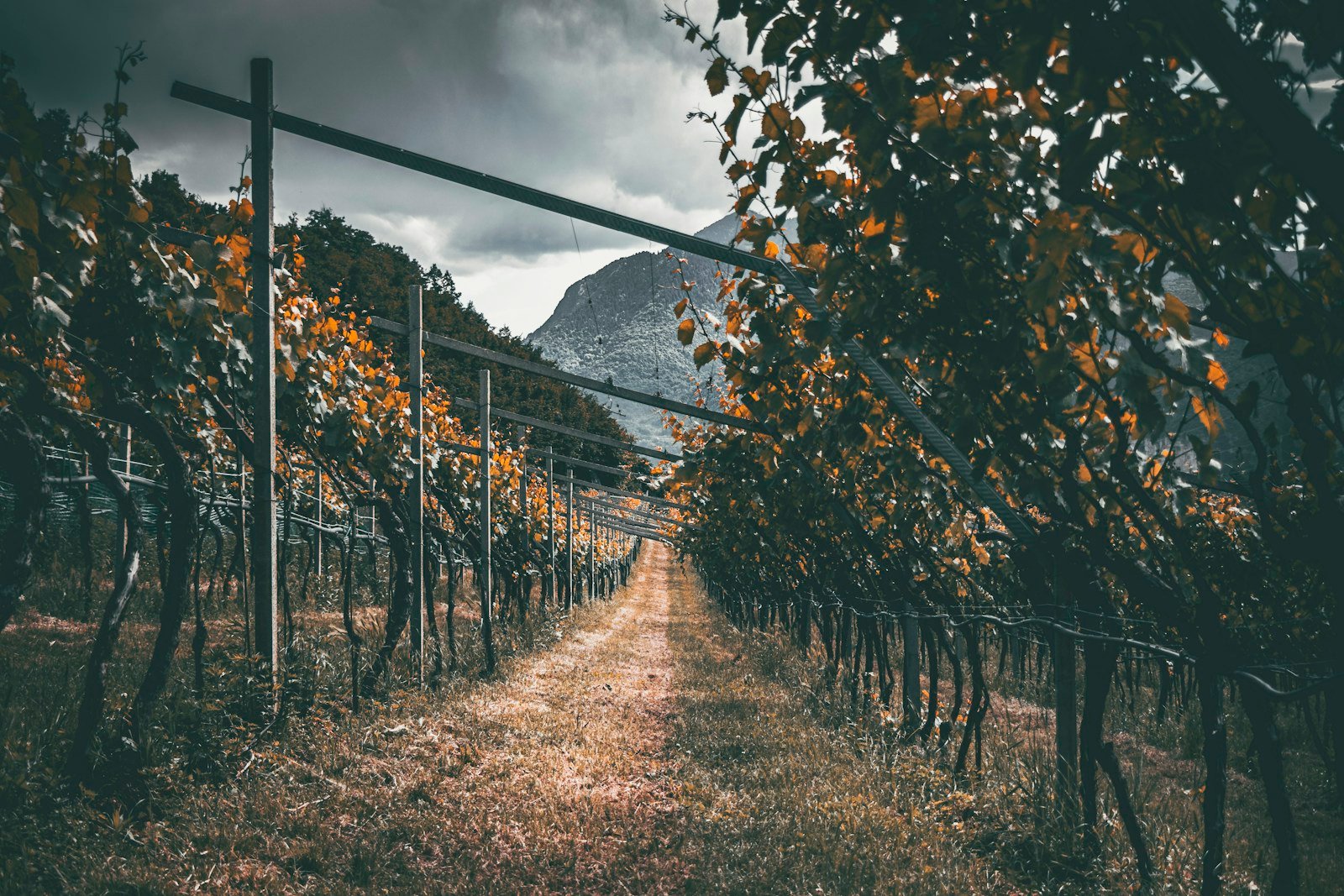
The robot moves between the vine rows without ceremony, navigating the narrow corridors of a Cognac estate in a series of slow, deliberate arcs. It is about the size of a riding lawnmower, low to the ground, autonomous, and tethered to a data stream updated every few minutes. The machine is called Ted, it is manufactured by a French company named Naïo Technologies, and it is a recognizable face in vineyard automation: deployed at Cognac estates across the Charente, weeding the vine corridors and, in select configurations, relaying soil readings back to the cellar in real time. The cellar master standing at the end of the row watches it turn and does not follow. There is nothing for him to do. The robot knows the way. It is precision viticulture technology in its most literal form: a machine that listens to the soil so the winemaker does not have to.
This is the image that precision viticulture’s advocates point to when they want to make the technology feel inevitable: a machine doing repetitive work, freeing the human for decisions that require a different kind of intelligence. Over the past three years, that image has become considerably less metaphorical and considerably more common. According to DataM Intelligence, the global precision viticulture market, valued at $3.24 billion in 2024, is projected to reach $9.51 billion by 2032, growing at a compound annual rate of 14.4 percent. Research suggests that more than 60 percent of large-scale premium wineries have adopted at least one precision tool, from soil sensors to drone-based canopy analysis to AI-driven disease prediction. Major agricultural equipment manufacturers have moved decisively into vineyard automation; John Deere has expanded its portfolio of autonomous orchard and vineyard equipment, while E. & J. Gallo has deployed AI-driven platforms for fermentation monitoring, irrigation scheduling, and vine health tracking. The question is no longer whether this technology is coming to wine. It is already here. The question is what it changes.
The technology stack is, at its core, a set of listening devices. Soil sensors measure moisture, temperature, and nutrient levels and transmit that data through IoT networks to platforms that can trigger irrigation adjustments in real time. Drones equipped with multispectral cameras fly predetermined routes and feed imagery to machine learning models that identify canopy stress, disease risk, and ripeness variability across a single block, sometimes to the resolution of individual vines. Weather station networks feed the same models, which output day-by-day recommendations for spraying schedules, pruning timing, and harvest windows. Research in arid regions has shown machine learning models for soil moisture prediction achieving accuracy rates above 90 percent in published trials. In documented cases, Italian vineyards have reduced water consumption by 20 percent with no measurable quality loss, while Australian operators have reported cutting irrigation by as much as half. The savings are real and, in a climate-stressed industry, increasingly necessary.
The Cost of Entry
The efficiency argument is compelling enough that it has attracted large capital, and that is precisely where the story gets more complicated. The vast majority of American wineries, by count, are small, family-owned operations, many of them running on margins that do not accommodate the upfront investment in sensors, GPS mapping systems, and variable-rate application equipment. Vendor-reported returns of 120 to 150 percent within 14 months read well in a sales presentation; they are harder to realize when the capital to fund the first year does not exist. The companies moving most aggressively into these tools are those that can absorb the setup cost: Gallo, Deere’s agricultural clients, large-scale Australian and European cooperatives. The same technology that promises to improve quality and reduce inputs for everyone is, in practice, arriving first for the players who need the margin improvement least. Vineyard automation may, inadvertently, accelerate a consolidation the industry is already struggling to slow.
What the Algorithm Cannot Know
And then there is the question of what, exactly, gets optimized away. The critics of algorithmic farming in wine are not Luddites; many of them use weather stations and soil probes and would not consider abandoning them. Their concern is more specific: that machine learning, applied to viticulture at scale, optimizes for consistency and measurability at the expense of the decisions that make a wine interesting. A soil sensor knows the moisture level in the root zone. It does not know that the winemaker’s grandfather always let the block on the slope run slightly dry in August because the resulting stress, that small, deliberate suffering, pushed the Grenache into something deeper than its neighbors. That knowledge is not transferable to a dataset. It is the kind of thing that exists in the hands and the memory of a person who has been paying attention for a long time.
The honest position sits somewhere between the two camps. Winemakers who have adopted the technology consistently report the same thing: that the tools are most valuable for the monitoring work that used to consume significant time and physical energy, and that they free the winemaker to focus on decisions that require actual expertise. AI watches the soil. The winemaker tastes, observes, decides. The danger is not that the technology is bad. The danger is structural: that winemakers who can afford to offload the monitoring work to AI will have more capacity for the judgment work, while those who cannot afford the tools are left doing both, at a competitive disadvantage that compounds over time.
The robotic grape picker being developed by researchers at Queen Mary University of London, with its AI-enabled ripeness detection and pressure-sensitive fingers, is designed to operate at the premium end of harvest, targeting fruit valued at around $6,500 per tonne. It is, in other words, a tool for the wines whose quality can justify the machine’s cost. Whether it ever reaches the cooperatives and mid-range producers who pick most of the world’s grapes is a different calculation, and a longer one.
Wine has always been shaped by the tools available to the people who grow it. The hydrometer, the refractometer, the temperature-controlled fermentation tank: each was once a disruption, and each eventually became invisible, absorbed into the craft without appearing to diminish it. The precision toolkit will likely follow the same arc. The sensors and the robots will become ordinary, the way the GPS tractor guidance system is already ordinary in most large-scale agriculture. What will not become ordinary is the judgment applied to what the sensors reveal. A machine can tell you the Grenache block is dry. Only the winemaker can decide whether that is a problem or the point. The craft is not in the measurement. It never was.
The next one arrives Thursday.
Vintage intelligence, producer profiles, and curated cellar picks — before the critics weigh in. Weekly dispatch.