

The Atlas › Southern Hemisphere › New Zealand › Marlborough
Marlborough
New Zealand’s Sauvignon Blanc kingdom, where cool maritime climate and innovative winemaking create the Southern Hemisphere’s most iconic white wine.
3
·
Cool Maritime
·
Sauv. Blanc · Pinot Noir
·
Gravel · Alluvial · Clay
VARIETIES
Sauvignon Blanc · Pinot Noir · Chardonnay · Pinot Gris · Riesling
Montana Wines planted Marlborough’s first commercial vines in August 1973, on land considered too cold, too remote, better suited to sheep than Sauvignon Blanc. The South Island’s northeast corner was treated with open skepticism by Auckland’s wine establishment. A decade of patient cultivation followed before David Hohnen, founder of Cape Mentelle in Western Australia, tasted a Marlborough Sauvignon Blanc and immediately recognized something unprecedented. He moved to New Zealand, partnered with winemaker Kevin Judd, and released the first Cloudy Bay vintage in 1985. That wine became one of the most influential white wine releases of the late twentieth century, reshaping global expectations of what Sauvignon Blanc could express. Within a single decade, Marlborough had fundamentally altered the international wine conversation.
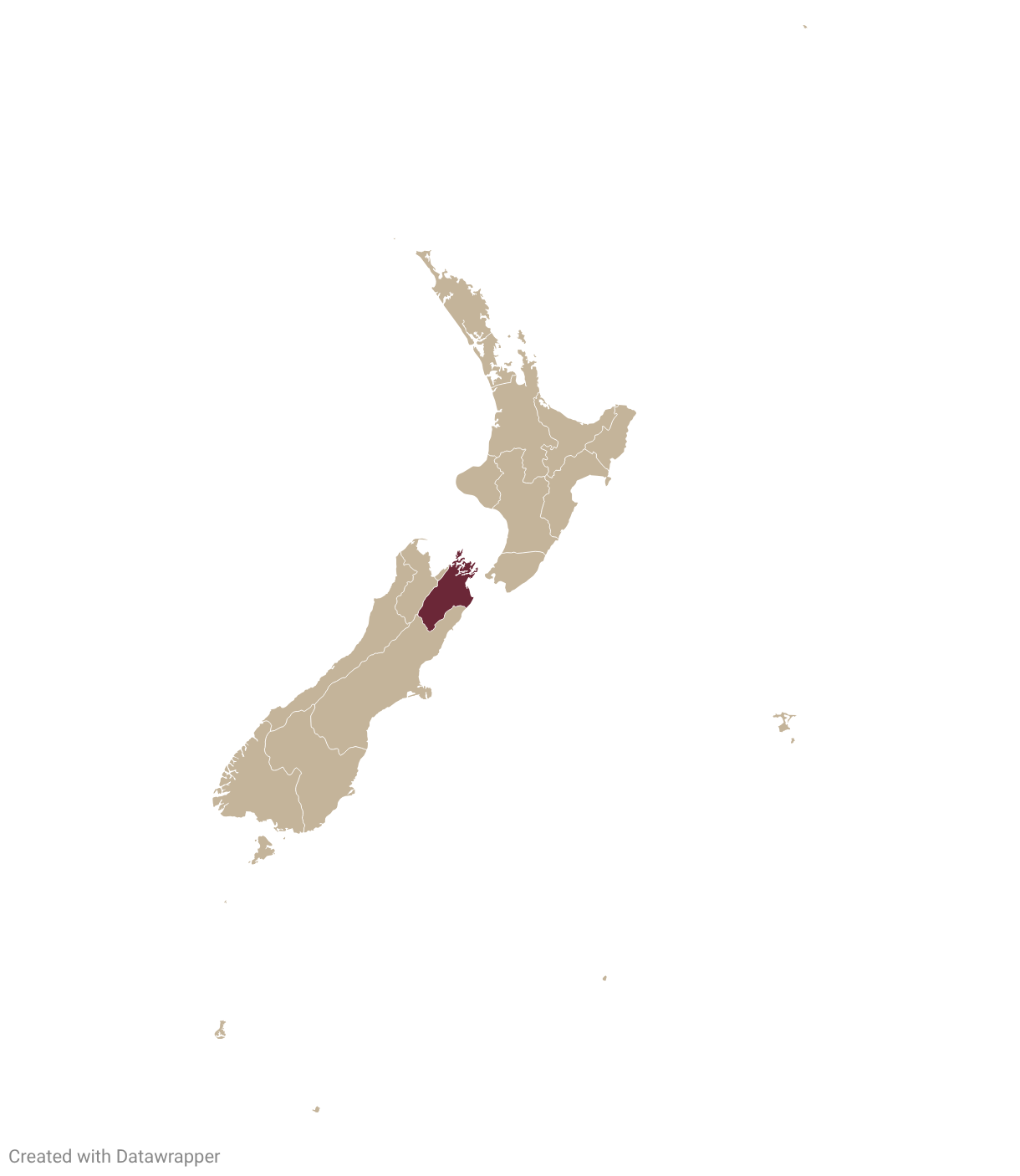
The region occupies the South Island’s northeast corner, where the Wairau and Awatere Valleys are sheltered from westerly rain by the Richmond Range, producing approximately 2,400 sunshine hours per year. Three sub-zones have evolved distinct identities. The Wairau Valley’s gravel-rich alluvial plains deliver the tropical, passionfruit-forward expression that first captivated the world. The cooler, windier Awatere Valley to the south yields leaner, mineral-edged wines with pronounced citrus and herbaceous notes. The inland Southern Valleys, Brancott, Fairhall, and Omaka, feature clay-dominant soils that produce wines of textural richness and broader structure. Diurnal temperature swings of up to 16 degrees Celsius through the growing season preserve acidity while concentration proceeds. The land itself has become as legible as the wines it produces.
When Signature Becomes Formula
Marlborough now accounts for 77 percent of all New Zealand wine production, a concentration that raises genuine questions about regional dependence and the global appetite for a single flavour profile. The region has become so synonymous with a particular expression of Sauvignon Blanc that the archetype itself risks calcification. Commercial success has been so complete that it invites the question: has Marlborough’s greatest asset become its greatest limitation? The answer, at the top of the market, is a qualified no. Producers such as Fromm, Seresin, Clos Henri, and Kevin Judd’s Greywacke have moved well beyond the early aromatic template, coaxing wines of genuine complexity and age-worthiness from sites once dismissed as marginal. Yet the gap between what the best producers achieve and what the region is globally understood to produce continues to widen. The style that changed the world now runs the risk of becoming its own cliché.
Pinot Noir accounts for roughly 12 percent of Marlborough’s plantings and is increasingly treated as the region’s second signature variety. The cooler Awatere Valley and higher elevations in the Southern Valleys have proven particularly expressive for the variety, yielding structured, mineral-edged wines that have drawn favourable comparison from Bob Campbell MW and Sam Kim to established cool-climate Pinot Noir regions. A younger generation is simultaneously exploring organic viticulture, whole-cluster fermentation, skin-contact whites, and minimal-intervention techniques that seek to reframe Marlborough’s possible vocabularies. These experiments matter not because they overturn the regional archetype, but because they preserve the possibility of complexity beneath what has become a commercially standardized identity.
The Land Speaks Differently in Each Valley
The three sub-valleys tell distinct stories, and reading them requires attention. The Wairau Valley’s alluvial gravels, river-sorted sediment accumulated over millennia, deliver the primary, fruit-forward intensity that became the regional default. The Awatere’s windswept schist and clay produce wines shaped by extended ripening and structural tension. The Southern Valleys’ continental soils yield broader, richer expressions that suggest what Marlborough Sauvignon Blanc might become when freed from its own template. Each valley responds differently to the same cool maritime climate, a reminder that geography is not uniform even when regional boundaries suggest uniformity.
The raw material remains exceptional: intense sunshine, cool nights, rain-shadow shelter, and varied soils create a foundation that, carefully managed, can produce wines of genuine distinction across multiple varieties and registers. The question facing Marlborough is not whether its terroir is sufficient. The question is whether the region can hold complexity and commercial confidence simultaneously. TERROIR reads Marlborough as a region at a crossroads between the formula that built it and the diversity the land has always offered. What matters now is whether the next chapter deepens understanding or simply extends habit.
“We wanted a dry but very aromatic and intensely fruity style of sauvignon blanc.”
— Kevin Judd, Founding Winemaker, Cloudy Bay
The Sub-Appellations
Marlborough’s three sub-appellations share a cool maritime foundation while diverging sharply in soil, temperature, and flavour profile — each offering a distinct interpretation of the region’s defining varieties.
Prestige
Wairau Valley
The heart of Marlborough — flat, gravel-rich alluvial plains where the Wairau River has deposited centuries of sediment. Producing the region’s archetypal Sauvignon Blanc: tropical, precise, and immediately expressive, with the passionfruit intensity that first put New Zealand wine on the world map.
Sauvignon Blanc · Pinot Noir · Chardonnay · Pinot Gris
Premier
Awatere Valley
South of the Wairau, the Awatere runs cooler and windier — a valley of schist, gravel, and clay that produces leaner, more mineral expressions with a pronounced herbaceous edge. Extended ripening windows and lower yields sharpen the profile toward citrus and stone rather than tropical fruit.
Sauvignon Blanc · Pinot Noir · Riesling · Gewürztraminer
Regional
Southern Valleys
An emerging inland arc of clay-dominant sub-valleys — Brancott, Fairhall, and Omaka — where continental influence moderates maritime freshness. Broader soils add textural weight and depth, producing Sauvignon Blancs of structural richness and Pinot Noirs with a distinctly different character from the valley floors.
Sauvignon Blanc · Pinot Noir · Chardonnay · Syrah
Last updated: April 2026
Related Stories
The next one arrives Thursday.
Vintage intelligence, producer profiles, and curated cellar picks — before the critics weigh in. Weekly dispatch.