

The Atlas > The Americas > USA > Columbia Valley, WA
Columbia Valley, WA
America’s most improbable fine-wine frontier — where desert heat, ancient flood basalt, and irrigation canals conspire to produce Cabernet and Syrah of startling ambition.
6
·
Arid Continental
·
~60,000
·
1984
VARIETIES
Cabernet Sauvignon · Merlot · Syrah · Riesling
The Columbia Valley’s transformation from sagebrush desert to Washington State’s viticultural engine began not with winemakers but with engineers. The Columbia Basin Project, authorized in 1943 and fed by Grand Coulee Dam, brought irrigation to half a million acres of arid steppe east of the Cascades—and with water came the possibility of agriculture at scale. Dr. Walter Clore, a horticulturist at Washington State University’s research station in Prosser, spent four decades from the 1930s onward trialing hundreds of grape varieties in this unlikely landscape, earning the title “Father of Washington Wine.” His work demonstrated that the region’s combination of long summer daylight, extreme diurnal temperature swings, and phylloxera-free soils could produce vinifera of genuine distinction. On 13 December 1984, the Columbia Valley received its AVA designation—a petition championed by Clore, enologist Wade Wolfe, and Chateau Ste. Michelle—formalizing what a handful of pioneers had already proved: the desert could make serious wine.
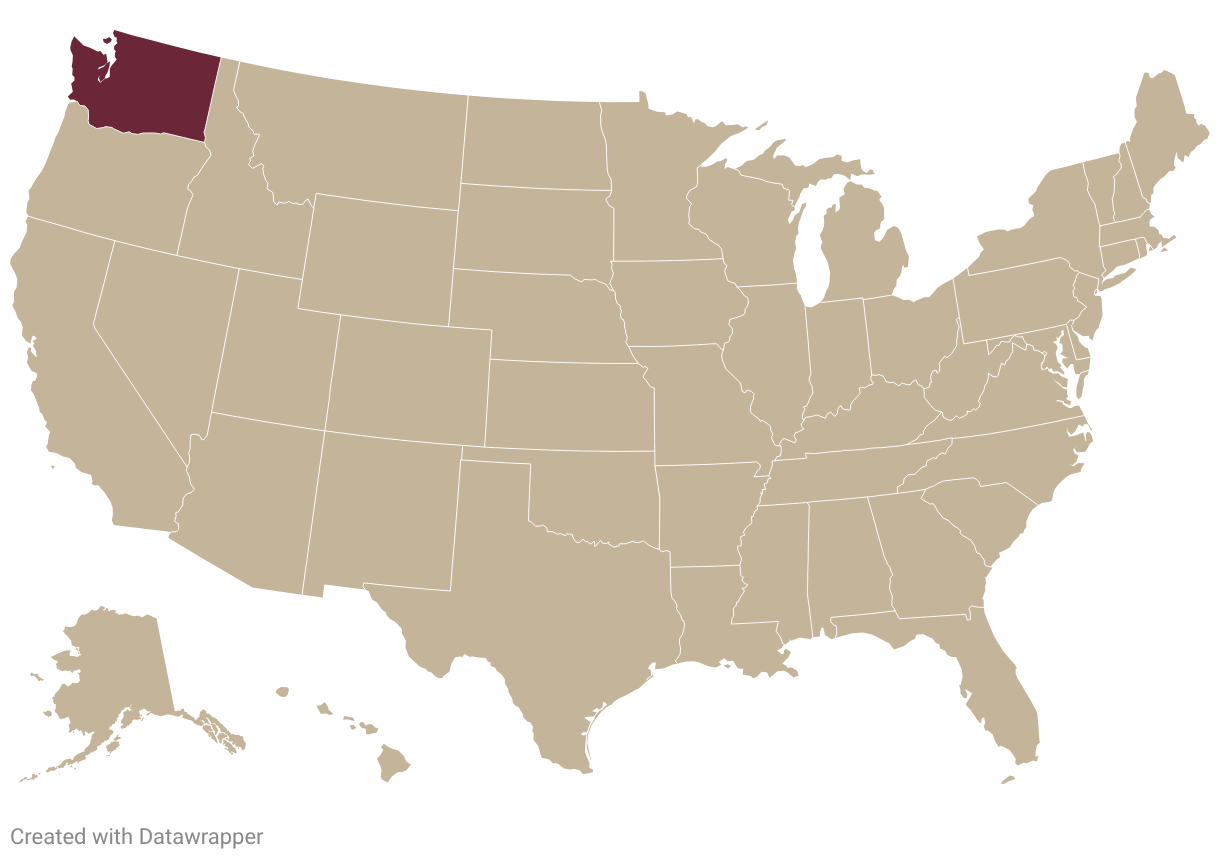
Today the Columbia Valley encompasses over eleven million acres of high desert spanning central and eastern Washington and a sliver of northern Oregon, making it one of the largest AVAs in the United States by total area. Within that expanse, roughly 60,000 acres are planted to vine—accounting for more than 99 percent of Washington’s total viticultural production and establishing the state as America’s second-largest wine producer after California. The region shelters eighteen nested sub-AVAs, from the prestigious concentration of Red Mountain to the expansive benchlands of Horse Heaven Hills and the historic Yakima Valley, Washington’s oldest AVA. Cabernet Sauvignon leads plantings, followed by Merlot, Chardonnay, Riesling, and Syrah, with more than thirty vinifera varieties under cultivation. The climate is defined by the Cascade rain shadow: annual precipitation averages just six to eight inches, making irrigation essential, while up to seventeen hours of summer daylight and over 300 days of sunshine per year give growers a degree of control that wetter regions can only envy.
The Desert Becomes Vineyard
The Cascade Range walls off the Pacific entirely, creating a continental desert where summer temperatures routinely exceed 100°F and irrigation is not optional but existential. Within this vastness, sub-AVAs have emerged as the region’s true story. Red Mountain, the smallest and most coveted at 4,040 acres, sits on south-facing slopes above the Yakima River where afternoon winds scour the vines, slowing ripening and building the phenolic complexity that makes its Cabernet among the most concentrated in Washington. Horse Heaven Hills, a wind-swept plateau above the Columbia River, produces wines of remarkable age-worthiness from loess soils deposited by the Missoula Floods fifteen thousand years ago. The Walla Walla Valley, straddling Washington and Oregon, has emerged as the spiritual capital of Washington fine wine, where university-trained winemakers produce Cabernet and Syrah of uncommon depth from cobblestone soils laid down by those same catastrophic floods.
The productive tension in the Columbia Valley is between scale and specificity. The AVA’s sheer size—larger than Belgium—means that “Columbia Valley” on a label communicates geography only in the loosest sense, and the region’s most ambitious producers increasingly reach for sub-AVA designations to distinguish the volcanic soils of Red Mountain from the wind-scoured loess of Horse Heaven Hills or the basalt-cobbled terraces of The Rocks District. Washington wine’s challenge is no longer proving it can make Cabernet and Syrah of international distinction—that argument was settled a decade ago—but rather convincing a global audience that its terroir diversity merits the same granular attention that Burgundy or the Rhône receives.
Scale and Specificity
The proliferation of new sub-AVAs over the past decade suggests the industry agrees: the future of Columbia Valley wine lies not in a single regional identity but in a mosaic of distinct sites, each with something particular to say about what happens when vines meet volcanic desert. Red Mountain commands the highest prices and most critical attention; its wines carry a concentration that reflects both the soils and the passionate attention of boutique producers who understand that the slope matters as much as the elevation. Horse Heaven Hills delivers volume and value, producing age-worthy Cabernet at prices that Napa abandoned a generation ago. Walla Walla occupies the prestige position for those willing to invest in bottles from a region that feels less like an American wine region than a collection of artisan projects.
The region’s greatest revelation is that desert, given water and volcanic soil, can produce wines of a complexity that cooler, wetter climates struggle to match. And it is only beginning to understand why.
With all the things they put my name on, I feel I should be six feet under.
— Dr. Walter Clore, Washington State University
The Sub-Appellations
The Columbia Valley’s eighteen nested AVAs reveal a region far more diverse than any single label suggests — from the wind-blasted concentration of Red Mountain to the cool-climate whites of Ancient Lakes, each sub-appellation carves its own identity from the volcanic desert.
Premier AVA
Walla Walla Valley
The spiritual capital of Washington fine wine, where a university town turned itself into America’s most concentrated pocket of artisan winemaking. Cobblestone soils and a fiercely independent producer culture yield Cabernet and Syrah of uncommon depth.
Cabernet Sauvignon · Syrah · Merlot · Tempranillo
Historic AVA
Yakima Valley
Washington’s oldest AVA and the cradle of its modern wine industry, where the state’s first post-Prohibition plantings took root in the 1960s. Cool-climate whites and structured reds coexist across a valley stretching from alpine foothills to desert floor.
Chardonnay · Riesling · Merlot · Cabernet Sauvignon
Prestige AVA
Red Mountain
The smallest and most coveted AVA in Washington — 4,040 acres of wind-blasted, south-facing slope that produces Cabernet Sauvignon of extraordinary concentration. Magnesium-rich calcareous soils and persistent afternoon winds build phenolic complexity few Washington addresses can match.
Cabernet Sauvignon · Merlot · Syrah · Cabernet Franc
Major AVA
Horse Heaven Hills
A vast, wind-swept plateau above the Columbia River where persistent afternoon gales slow ripening and build phenolic complexity. The source of some of Washington’s most age-worthy Cabernets and a Sauvignon Blanc that rivals the best of New Zealand.
Cabernet Sauvignon · Merlot · Chardonnay · Sauvignon Blanc
Major AVA
Wahluke Slope
A south-facing, frost-free bench between the Saddle Mountains and the Columbia River — Washington’s warmest AVA and a powerhouse for ripe, generous reds at every price point. The long growing season and abundant heat accumulation consistently yield fruit-forward Cabernet and Merlot of broad appeal.
Cabernet Sauvignon · Merlot · Syrah · Riesling
Emerging AVA
Ancient Lakes
Named for the ice-age lakes that carved its chalky, calcium-rich soils, this cool-climate pocket produces electric Riesling and Chardonnay with a minerality that belies its desert setting. The Columbia Gorge funnels cold air from the Pacific, moderating summer heat and extending the growing season.
Riesling · Chardonnay · Pinot Gris · Gewürztraminer
Last updated: April 2026
Related Stories
TERROIR’s Columbia Valley coverage — appellations, producers, and vintages worth knowing.
The next one arrives Thursday.
Vintage intelligence, producer profiles, and curated cellar picks — before the critics weigh in. Weekly dispatch.