

Ribera del Duero
Spain’s high-plateau challenger — where Tempranillo at 750 metres produces wines of dark intensity and mineral power that have prompted the world to reassess what the grape can achieve.
~26,000 ha
·
750–900m
·
20°C
·
1982
VARIETIES
Tinto Fino · Cabernet Sauvignon · Merlot · Albillo Mayor
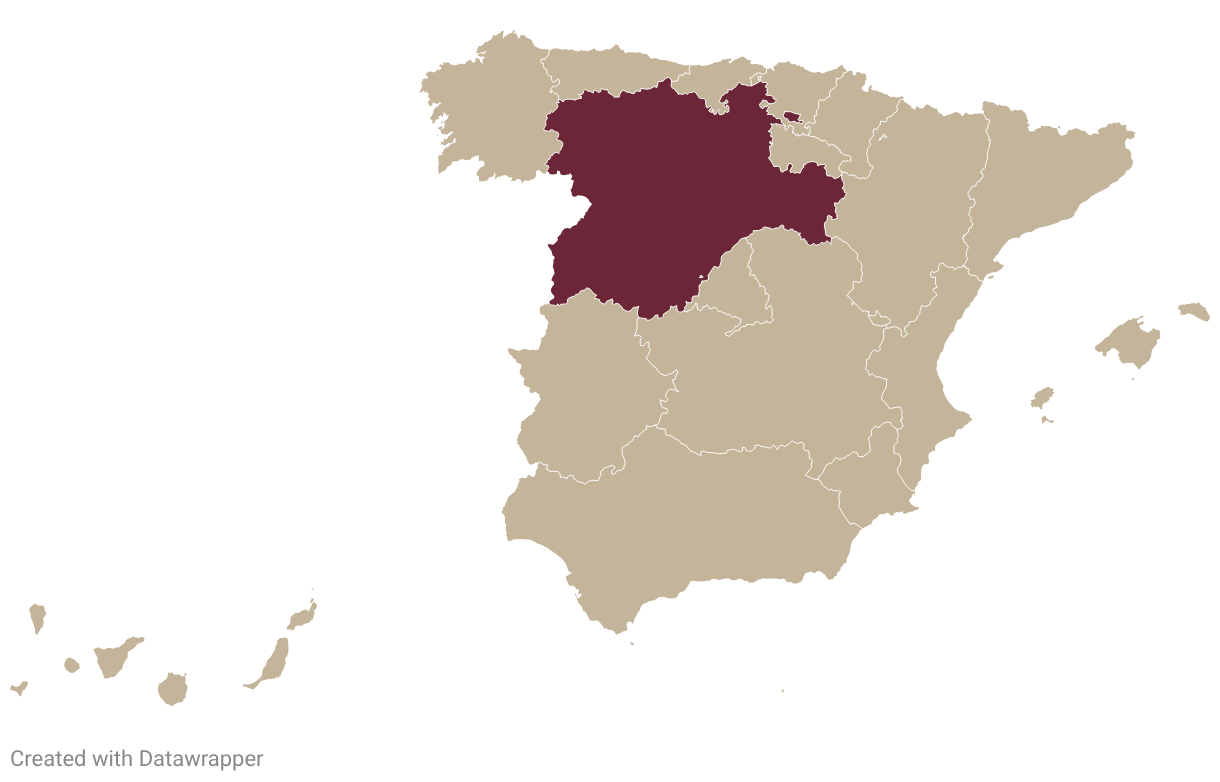
Ribera del Duero sits on the Castilian meseta at altitudes that would seem inhospitable to fine wine by Mediterranean logic: 750 to 900 metres above sea level, with winters cold enough to kill unprepared vines, summers hot enough to desiccate them, and frosts that can arrive in May or September without warning. The Duero river—which becomes the Douro as it crosses into Portugal—moderates these extremes slightly, but Ribera is fundamentally a region that makes wine despite its climate rather than because of it. This severity is the point. The diurnal temperature swings of up to 20°C between summer day and night preserve acidity and concentrate flavour in ways that warmer, lower-altitude sites cannot replicate, and the old Tinto Fino vines that have adapted over generations to these conditions produce wines with a mineral intensity and tannic structure that few other Spanish regions can match.
The region’s modern reputation was built largely by two estates. Vega Sicilia, established in 1864, had been producing age-worthy wine in near-total obscurity for decades when it received international critical attention in the 1980s—its Único bottling, typically released after a decade or more of aging in various combinations of oak and bottle, remained for years among the most sought-after wines made in Spain. Alejandro Fernández at Pesquera demonstrated in the 1980s that Vega Sicilia was not an anomaly: that Ribera del Duero’s terroir, with attentive winemaking, could produce wines of comparable depth at more accessible prices. The DO designation followed in 1982, and a region that most serious wine buyers had never heard of became, within a decade, one of Spain’s most prestigious red wine addresses alongside Rioja.
Tinto Fino—the local name for Tempranillo—tends to behave differently here than in Rioja. The high altitude generally produces smaller berries with thicker skins, resulting in wines with deeper colour, firmer tannins, and a darker fruit profile: blackberry, cassis, graphite, and tobacco rather than Rioja’s characteristic cherry and vanilla—though that latter comparison owes as much to oak-aging traditions as to terroir alone. The most structured wines are built for long aging—Vega Sicilia Único is regularly drunk at 20 to 30 years and continues to evolve—but the DO’s production also encompasses approachable Crianza-level wines that deliver the region’s characteristic mineral backbone without requiring a decade of patience.
“This barren plateau between Valladolid and Aranda de Duero, in the very heart of Old Castile, is producing some of Spain’s most admired and most expensive red wines.”
— Jancis Robinson, The Oxford Companion to Wine
The Sub-Zones
Three expressions of the Castilian plateau—from the region’s legendary estates to the old-vine villages where value still outpaces reputation.
Prestige
Valladolid & Central Ribera
The region’s benchmark zone: deep limestone-clay soils at the plateau’s core. Home to Pesquera, Dominio de Pingus, and other estates that defined Ribera’s international reputation. Dark, structured Tinto Fino with notable aging potential.
Tinto Fino · Cabernet Sauvignon · Merlot · Albillo Mayor
Prestige
Vega Sicilia & Eastern Ribera
Spain’s most storied estate defines this eastern stretch near the Duero: sandy alluvial soils over limestone bedrock, cooler temperatures from river proximity, and old vines producing concentrated yet elegantly structured wines. Único, typically released after a decade of aging, remains one of Spain’s most age-worthy reds.
Tinto Fino · Cabernet Sauvignon · Merlot · Malbec · Albillo
Emerging
Western Ribera & Old Vines
Old Tinto Fino bush vines in the western villages, farmed by families who never replanted after phylloxera. Sandy soils and extreme altitude produce wines of raw mineral power at prices the central zone left behind a generation ago—an increasingly recognized source of value.
Tinto Fino · Albillo Mayor · Garnacha
Last updated: April 2026
Related Stories
The latest from TERROIR on Ribera del Duero wines, estates, and vintages.
The next one arrives Thursday.
Vintage intelligence, producer profiles, and curated cellar picks — before the critics weigh in. Weekly dispatch.