

Priorat
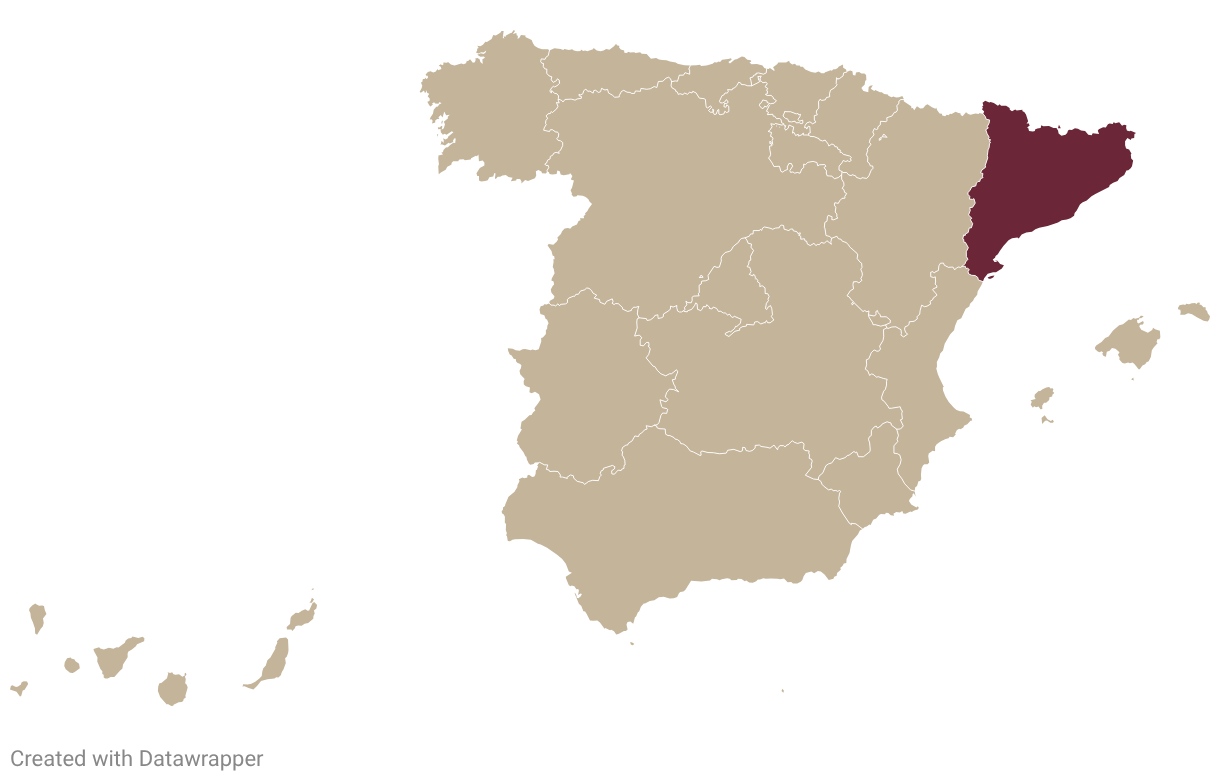
Spain’s most extreme terroir — vertical slate terraces in a hidden Catalan canyon, where old-vine Garnacha and Cariñena earned the country’s second DOCa in 2009.
~2,100 ha
·
2009
·
12
·
60%+
VARIETIES
Garnacha · Cariñena · Cabernet Sauvignon · Syrah
Priorat occupies a series of steep valleys in the Tarragona hills of inland Catalonia, enclosed by mountains so effectively that the region had almost no wine reputation at all when Álvaro Palacios arrived from Rioja in 1989. What he found was an abandoned landscape of near-vertical terraces cut from dark, flaking llicorella slate and quartzite, planted with old Garnacha and Cariñena vines that had survived the post-phylloxera devastation and the region’s gradual depopulation. The wines those vines produced—with minimal intervention and intense natural concentration from low yields—became Les Terrasses and, by 1993, L’Ermita: bottlings that changed Spain’s conception of what its terroir could achieve.
The llicorella schist is the central fact of Priorat. This fractured, nutrient-poor, heat-retaining slate forces vine roots to penetrate deep in search of moisture, produces tiny berries of concentrated flavour, and imparts a mineral character—graphite, iron, something between the smell of hot stone and struck flint—that distinguishes Priorat from every other wine region working with the same grape varieties. Garnacha on llicorella achieves an ink-dark density and structured power that bears little resemblance to the pliant, fruity Grenache grown on fertile valley floors across southern France. Cariñena, usually treated elsewhere as a blending workhorse, becomes here a wine of depth and character, its natural acidity and tannin harnessed rather than masked.
The DOCa designation, awarded in 2009, brought Priorat alongside Rioja as one of only two Spanish appellations to hold that highest classification—recognition of a quality transformation achieved within a single generation. The attention has driven prices at the top end to levels comparable with classified Bordeaux. But Priorat’s smaller estates and cooperative producers continue to offer bottles that deliver the region’s essential character—wild, mineral, site-specific—at prices that reward the curious buyer willing to look past the headline clos estates.
“Priorat’s llicorella provides one of the world’s most directly taste-able demonstrations of the influence of soil on wine.”
— Jancis Robinson, The World Atlas of Wine
The Sub-Zones
Three villages, three reads on the same llicorella—from the historic clos estates to the emerging value terraces.
Prestige
Gratallops & The Clos
Priorat’s founding village and spiritual centre: where Álvaro Palacios and the 1989 generation established their estates on the steepest llicorella terraces. Home to L’Ermita, Clos Mogador, and Clos l’Obac.
Garnacha · Cariñena · Cabernet Sauvignon · Syrah · Merlot
Prestige
Porrera & Poboleda
Higher altitude and cooler exposure, with some of Priorat’s most intact old-vine Cariñena. Producers like Ferrer Bobet and Terroir al Límit demonstrate that elegance is a Priorat option.
Cariñena · Garnacha · Cabernet Sauvignon
Emerging
Bellmunt & El Lloar
Priorat’s value tier: lower-profile villages where smaller producers and cooperatives make honest Priorat at accessible prices. The llicorella character is present—mineral, structured, dark—without the scarcity premium of the headline estates.
Garnacha · Cariñena · Syrah
Last updated: April 2026
Related Stories
The latest from TERROIR on Priorat wine, producers, and the llicorella terraces.
The next one arrives Thursday.
Vintage intelligence, producer profiles, and curated cellar picks — before the critics weigh in. Weekly dispatch.