

The Atlas › Southern Hemisphere › New Zealand › Hawke’s Bay
Hawke's Bay
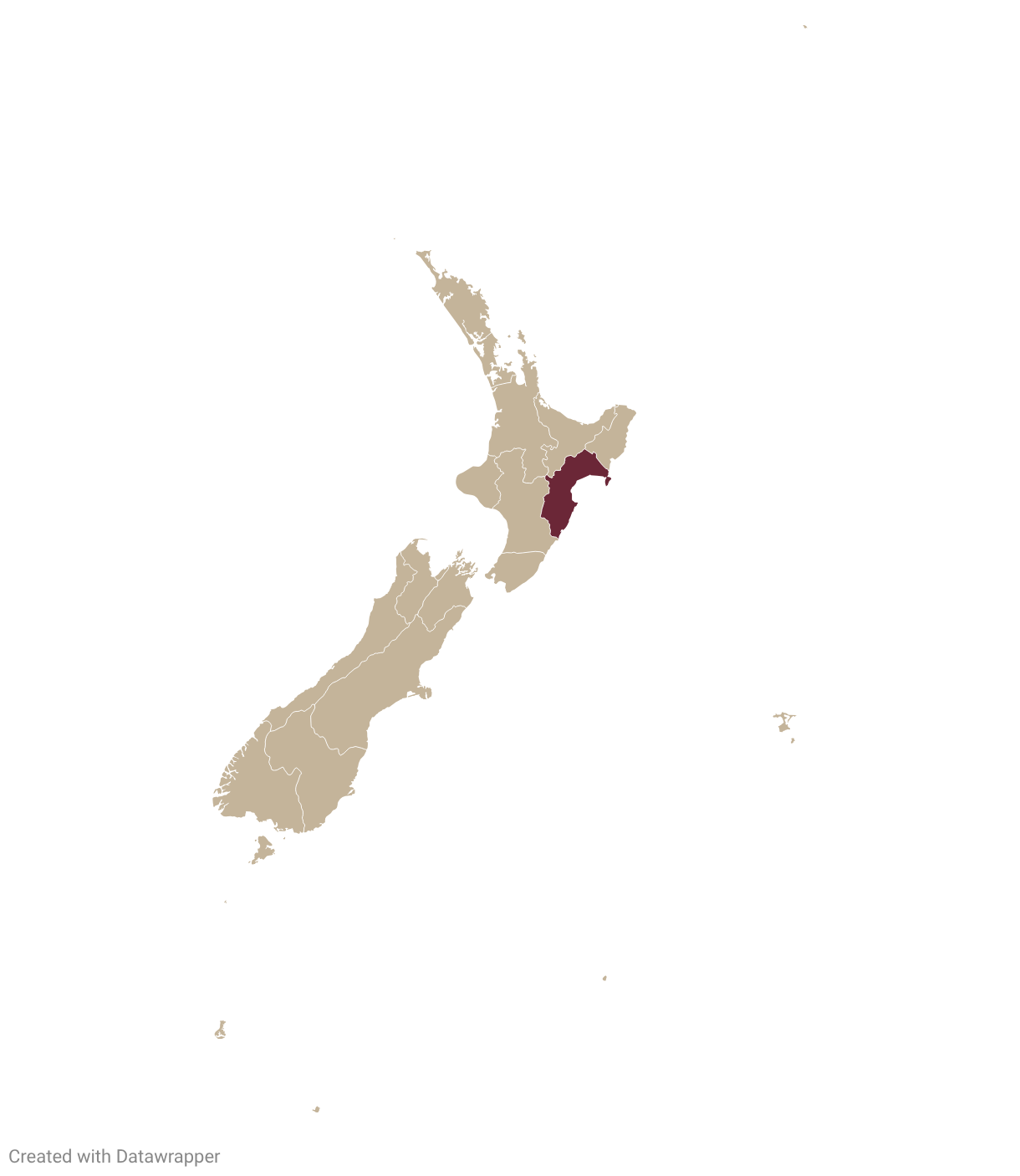
New Zealand’s warm-climate revelation — where ancient river gravel and maritime sun ripen red wines the South Island never could.
3
·
Warm Maritime
·
Syrah · Chardonnay
·
Ancient Gravel
VARIETIES
Syrah · Chardonnay · Cabernet Sauvignon · Merlot · Cabernet Franc
In 1851, French Marist missionaries arrived at Pakowhai on the Ngaruroro River’s banks with sacramental intention and gave New Zealand its first permanent vineyard. Mission Estate, established that year, remains in continuous operation today, making it New Zealand’s oldest winery. For over a century afterward, Hawke’s Bay was not merely a wine region but the wine region, the only place in New Zealand where serious red wine ambition had roots. The infrastructure was institutional: Mission’s example bred others, Te Mata, Trinity Hill, and Craggy Range, who built the language and equipment to speak about what this particular combination of soil and sun could produce. Yet the region’s defining discovery was not the 1851 plantings or the grand estates that followed. It was an accident of geology buried one hundred years in the ground.
In 1867, catastrophic flooding shifted the Ngaruroro River’s course, depositing an ancient river terrace of alluvial greywacke, deep, free-draining gravel, across what would become the Gimblett district. No one noticed. Gravel quarrying continued through the 1980s and 1990s while Marlborough’s Sauvignon Blanc revolution redirected global attention southward. When the gravel was finally recognized, officially designated a geographic indication in 2001, it changed everything. The Gimblett Gravels Winegrowing District holds these stones as a thermal battery, absorbing heat by day and radiating it through cool nights in quantities that ripen Cabernet Sauvignon and Merlot to a fullness rarely seen elsewhere in New Zealand. Hawke’s Bay had spent 150 years building the case for its red wine destiny. The gravel simply made the argument undeniable.
Syrah or Claret—What Is Hawke’s Bay, Anyway?
The region’s red wine identity has never been singular. Established estates built their reputations on Bordeaux blends: Cabernet Sauvignon with Merlot in proportions that echo the Right Bank’s architecture, darkened by Malbec and Cabernet Franc. These wines have structural integrity and genuine age-worthiness. They are the work of the old guard, the architects of Hawke’s Bay’s post-war legitimacy. But a parallel argument has been gathering force for twenty years, and it centres on Syrah. Roughly 85 percent of New Zealand’s Syrah plantings live in Hawke’s Bay. The variety has found in these soils a voice between the Northern Rhône’s mineral restraint and the warm-climate opulence of Australia, with its own register of white pepper, smoked meat, dark cherry, and iron-earthy precision.
The Bridge Pa Triangle, a 2,000-hectare district west of Hastings shaped by volcanic pumice and ancient riverbed soils, has emerged as the epicentre of this emerging identity. Trinity Hill, Rod McDonald, and a cohort of younger producers are making single-vineyard Syrah here with textural complexity and aromatic precision that redefines what Southern Hemisphere Syrah can express. There is no contradiction between these two arguments. Gimblett Gravels will continue to produce structured Bordeaux blends that improve over twenty years in the cellar. Bridge Pa will continue to assert its claim to the region’s most distinctive stylistic territory. The answer to the identity question, uncomfortably for marketers but usefully for wine drinkers, is that Hawke’s Bay is both. The old guard and the new wave are not enemies but evidence of terroir’s capacity to hold multiple truths simultaneously.
Where Gravel Becomes Wine
The Heretaunga Plains spread eastward from the Kaweka and Ruahine Ranges, which intercept prevailing westerlies and grant the lowlands some of New Zealand’s most reliable sun. Hawke’s Bay receives upward of 2,250 hours of bright sunshine annually, comparable to Marlborough and among the highest totals in the country. The rain-shadow effect makes it dry. Growing seasons consistently reach temperatures two degrees Celsius warmer than Marlborough. Yet it is not simply warm; it is warm and maritime. The Pacific moderates summer heat and prolongs the autumn, allowing grapes to develop sugar and phenolic ripeness without the cooked-fruit character that warmer regions often produce.
The Gimblett Gravels sit atop deep alluvial deposits of greywacke, stones compacted from sand and thrust from the sea five million years ago. These gravels are not incidental to the wine they produce; they are the wine. They hold thermal mass accumulated through the growing season and release it into cool nights when vines need it most. This creates the conditions necessary for full Bordeaux ripeness. But they also drain with uncompromising efficiency, stressing the vine slightly and concentrating flavour compounds. The limestone and clay soils of Bridge Pa create different conditions: more water retention, more mineral expression, a cooler rooting environment that slows ripening and preserves acidity. This is why Syrah from Bridge Pa tastes different from Syrah grown on Gimblett gravel, not by stylistic choice alone, but by the imperatives of stone and soil.
In a global wine marketplace compressed around single varietals and simplified narratives, Hawke’s Bay refuses compression. Its history is French missionary vision and Māori land. Its climate is maritime sun in a rain shadow. Its argument is gravel and clay, Syrah and Cabernet, old establishment and new ambition. John Buck, who stewarded Te Mata for decades with the conviction that New Zealand could produce red wines of the highest order, understood this: “We feel like we owe it to the place to make wines speaking about where they are from.” Hawke’s Bay’s wines speak with clarity.
“We feel like we owe it to the place to make wines speaking about where they are from.”
— John Buck, Te Mata Estate
The Sub-Appellations
Three distinct terroir zones define Hawke’s Bay’s internal geography — each shaped by different soil, microclimate, and stylistic ambition, together making the most compelling case for red wine diversity in New Zealand.
Prestige GI
Gimblett Gravels
Declared a geographic indication in 2001, the Gimblett Gravels Winegrowing District sits on deep ancient river stones that absorb heat by day and radiate it through cool nights — driving full Bordeaux-variety ripening that remains unmatched elsewhere in New Zealand.
Cabernet Sauvignon · Merlot · Syrah · Cabernet Franc
Premier
Bridge Pa Triangle
A compact clay and limestone district west of Hastings, Bridge Pa Triangle has emerged as Hawke’s Bay’s most persuasive address for Syrah — peppery, smoked olive, dark cherry, iron-mineral precision that carries the region’s most distinctive stylistic stamp.
Syrah · Chardonnay · Cabernet Sauvignon · Viognier
Regional
Havelock Hills
The coastal slopes east of Havelock North benefit from direct Pacific maritime influence, producing Chardonnay of mineral-driven elegance and Sauvignon Blanc with more structural generosity and texture than the South Island’s leaner style.
Chardonnay · Sauvignon Blanc · Pinot Gris · Pinot Noir
Last updated: April 2026
Related Stories
The next one arrives Thursday.
Vintage intelligence, producer profiles, and curated cellar picks — before the critics weigh in. Weekly dispatch.