

Piedmont
Where Nebbiolo transforms the Langhe hills into an argument for patience that few other wine regions can match.
~44,000 ha
·
17
·
3
·
2014
VARIETIES
Nebbiolo · Barbera · Dolcetto · Moscato · Arneis · Cortese
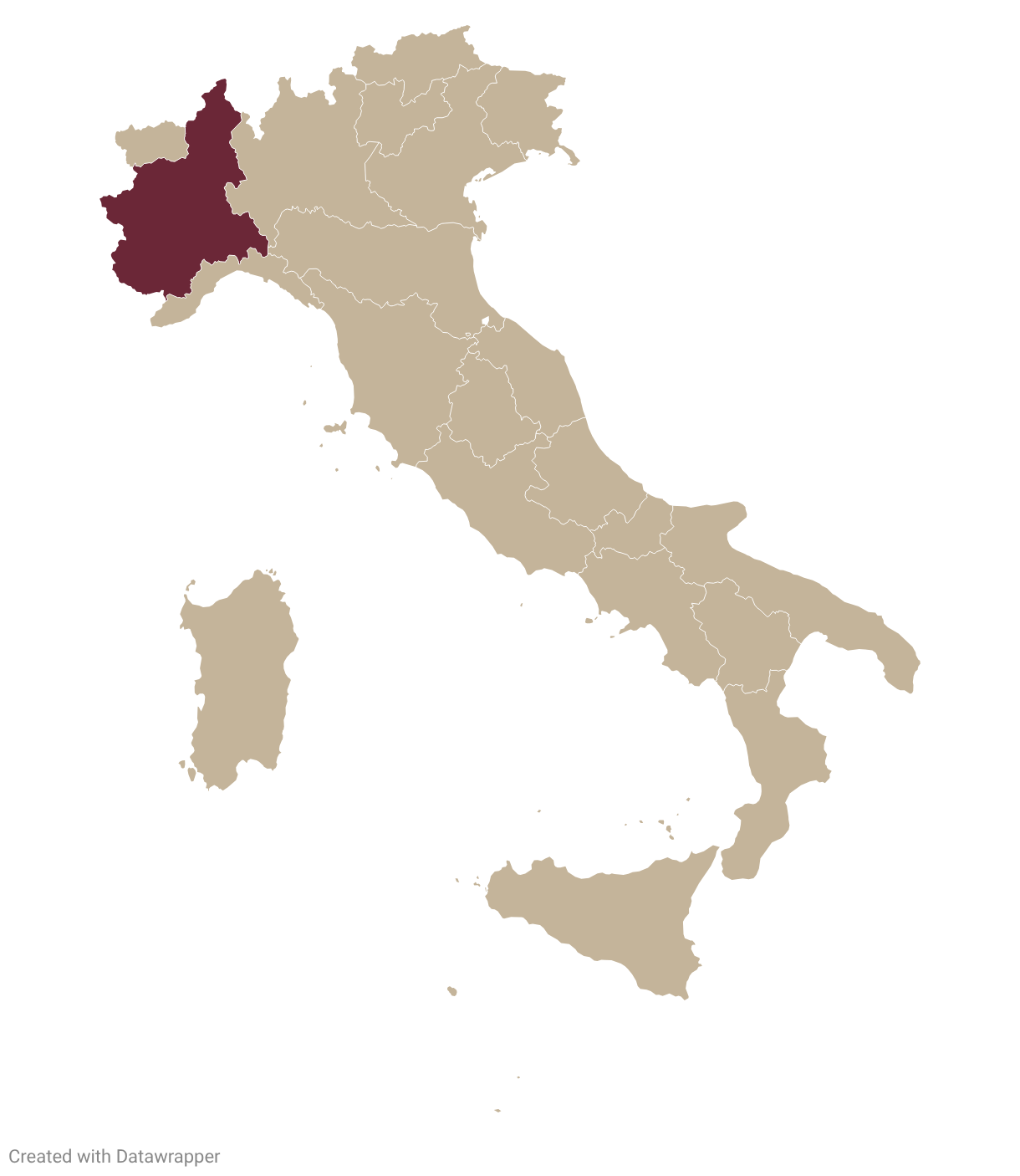
Piedmont sits in the northwestern corner of Italy, enclosed on three sides by the Alps and Apennines. This geography is not incidental to the wines here; it is foundational. The region’s isolation—physical and temperamental—created a winemaking culture that developed on its own terms, indifferent to fashion, uninterested in apology. The great estates of Barolo, Barbaresco, and the Langhe villages have historically produced wines that demanded patience rather than explained themselves. For over a century, the Falletti family and other Barolo producers elevated Nebbiolo from provincial red into a wine of international stature, establishing a template for site-driven winemaking that would define the region. That work—methodical, unapologetic, generational—remains the foundation of everything that follows in Piedmont.
Nebbiolo is the central character of Piedmontese wine, and it is among the most geographically sensitive red grapes in European viticulture. It ripens late in a continental climate, requiring the specific calcareous marl soils of the Langhe to achieve its signature combination of perfume and structure. When young, Nebbiolo displays a deceptive paleness that belies the tannins developing beneath the skin; given a decade of cellaring—not an aspiration in Piedmont, but a minimum—these wines develop into something formidable, their aromatics unfolding across years. Both Barolo and Barbaresco are made exclusively from Nebbiolo. Both sit within the UNESCO-listed Langhe-Roero landscape, inscribed in 2014. Both reward the patience that Nebbiolo demands. Yet their characters diverge, shaped by soil and a long tradition of rivalry.
The War Over Wood
The distinction between Barolo and Barbaresco runs deeper than geography. Barolo’s Tortonian soils—older, more compressed—produce wines of greater structure and tannin weight; Barbaresco’s Helvetian marls yield wines with more refinement and elegance. But in the 1980s and 1990s, this geological difference became entangled in a cultural and philosophical split. Traditionalist producers like Giacomo Conterno and Bruno Giacosa continued aging Nebbiolo in large wooden botti, neutral vessels that allowed the wine’s inherent character to develop without oak’s imprint. A new wave—Elio Altare prominent among them—adopted French barrique, smaller oak vessels that added vanilla and spice to the wine’s profile. The debate, framed as “old wood versus new wood,” was actually about whether Piedmont’s identity was fixed in tradition or open to evolution. The region absorbed both positions. Today, the most respected producers move between formats, choosing large botti or barrique based on the specific vintage and vineyard, not doctrine. This flexibility, hard-won, is now standard across the region’s 11 Barolo communes and Barbaresco’s 3 communes, plus the satellite village of San Rocco Seno d’Elvio.
What remains constant is the paradox that defines Barolo and Barbaresco: they are wines of world-recognition produced at village scale. Across the entire region, Piedmont cultivates approximately 44,000 hectares of vineyard and holds 17 DOCG designations—a concentration of prestige that reflects decades of quality-driven investment. Yet a single producer in Barolo might work only 10 or 20 hectares, limiting annual production to a few thousand bottles. This scarcity, combined with demand, has driven prices upward. A fine Barolo from a recognized producer can command the price of a Bordeaux première cru. This pricing is not unjustified—the best Barolos age for 30, 40, even 50 years—but it has also created a secondary market in Barbaresco, where comparable quality and aging potential often arrive at lower entry prices. For collectors with patience and modest cellaring space, Barbaresco has become the more intelligent choice.
The Generous Other Half
The other face of Piedmont is gentler and more immediate. Barbera d’Alba and Barbera d’Asti—high-acid, fruit-forward, without Nebbiolo’s forbidding tannins—are the wines Piedmontese people drink daily. They are meant for the table, not the cellar: acidity that cuts through rich pasta, tannins soft enough to enjoy at five years old or five months. Moscato d’Asti, lightly sparkling and sweetly aromatic, is a low-alcohol wine of considerable delicacy. Its residual sweetness—around 100 grams per liter in most bottlings—reads as refreshment rather than dessert wine, making it one of the most versatile wines in Italian viticulture, equally at home with fresh fruit or blue cheese. These wines lack the monumentality of Nebbiolo, but they possess something equally valuable: accessibility without compromise. They are proof that Piedmont’s conviction—that wine should taste of somewhere specific—does not require decades of patience to be proven.
Piedmont is rarely a simple region, but even its simpler wines carry an intellectual rigor. A young Barbera aged in neutral wood for 12 months rather than stainless steel carries the winemaker’s philosophy about extraction and aging. A Moscato d’Asti from a specific vineyard in Canelli reflects soil minerality as clearly as a white Burgundy. This refusal to make simple wine simply—to approach every category with seriousness—defines the region more than any single grape or appellation. It is what separates the region from places where ease is the goal. In Piedmont, ease is a byproduct of intention.
The wines of Piedmont reward repeated exploration in a way few regions can match. A first bottle of Barolo, opened too young, teaches patience. A Barbera d’Alba, drunk at the table with friends, teaches immediacy. A glass of Moscato d’Asti on a summer afternoon teaches pleasure without pretense. Return to the same producer or vineyard years later, and the wines will have evolved in ways that clarify what was learned before. This is not marketing language. It is the cumulative testimony of collectors, sommeliers, and drinkers who have made Piedmont a reference point for what serious winemaking can achieve. The region’s greatest gift is that it works equally well as a destination for the scholar and the hedonist. Both will find something worth returning to.
“Piedmont stands apart from the rest of Italy. Where other regions trade on warmth and abundance, Piedmont insists on restraint, on structure, on the idea that a wine’s character should reveal itself slowly, over years, not minutes.”
— Burton Anderson, The Wine Atlas of Italy
The Appellations
From Nebbiolo’s two DOCG expressions to the everyday brilliance of Barbera—three appellations across the Langhe hills and beyond.
Grand Cru
Barolo
Nebbiolo at its most powerful—Tortonian calcareous soils across eleven communes produce wines of rose petal, tar, and dried cherry that require a decade or more to resolve their tannins. Serralunga d’Alba and La Morra produce the most distinct character variations.
Nebbiolo
Grand Cru
Barbaresco
Nebbiolo’s more approachable expression—Helvetian marls just north of Alba produce wines of similar complexity to Barolo but with softer tannins and earlier accessibility. Three principal communes—Barbaresco, Treiso, Neive—plus the frazione of San Rocco Seno d’Elvio each contribute their own inflection.
Nebbiolo
Regional
Barbera & Moscato
The approachable Piedmont—Barbera d’Alba and Barbera d’Asti deliver high-acid, fruit-forward reds for near-term drinking at genuine value. Moscato d’Asti, lightly sparkling and low in alcohol, is one of the region’s most distinctive and underrated wines.
Barbera · Dolcetto · Moscato · Arneis · Cortese
Last updated: April 2026
Related Stories
TERROIR’s Piedmont coverage—regional reporting, market dispatches, and the stories
shaping what ends up in your glass.
The next one arrives Thursday.
Vintage intelligence, producer profiles, and curated cellar picks — before the critics weigh in. Weekly dispatch.