

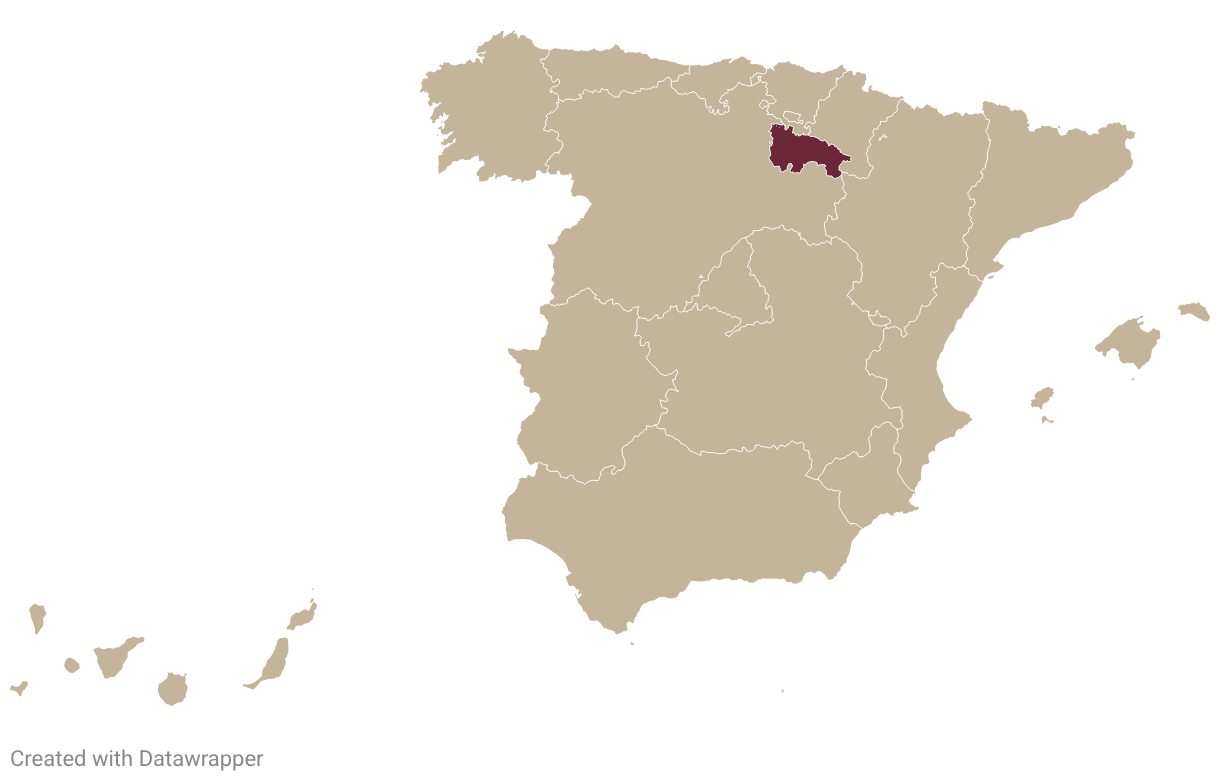
Rioja
Spain’s first DOCa-designated wine region — where American oak, Tempranillo, and a structured aging tradition set the standard for Spanish fine wine since the late nineteenth century.
~66,000 ha
·
1991
·
3
·
5 Years
VARIETIES
Tempranillo · Garnacha · Graciano · Mazuelo · Viura
Rioja received Spain’s first DOCa (Denominación de Origen Calificada) designation in 1991, formal recognition of what the region had been building since the late nineteenth century. Bordeaux-trained winemakers arrived in the Ebro Valley after phylloxera devastated French vineyards in the 1860s and 1870s, bringing oak barrels, blending techniques, and the conviction that Spanish Tempranillo—planted at altitude, on limestone-rich soils, with the Sierra Cantabria moderating the Atlantic climate—could produce wine of real quality and longevity. The tradition they established endures, and Rioja’s capacity to produce age-worthy wine across a range of price points remains one of the more dependable propositions in the wine world.
The oak aging system—Crianza, Reserva, Gran Reserva—is Rioja’s most recognisable contribution to wine vocabulary. A Gran Reserva must spend at least two years in oak and a minimum of two in bottle, with a total of five years before release; the finest examples from houses like López de Heredia, La Rioja Alta, and Muga can continue developing for decades in the cellar. The traditional style employs American oak, which imparts vanilla, dill, and coconut characteristics inseparable from the Rioja identity. The modern camp, led by producers like Remírez de Ganuza and Artadi, favours French oak and single-vineyard bottlings—formalised since 2017 under the Viñedo Singular category—that emphasise terroir over house style. Both traditions produce distinctive wine; understanding the difference is part of learning what Rioja is.
The three sub-zones carry distinct personalities that Rioja’s unified labelling has historically obscured. Rioja Alta, west of Logroño, sits at higher altitude with Atlantic influence and produces wines broadly recognised for their elegance and aging potential—home to the traditional houses whose Gran Reservas can develop for decades. Rioja Alavesa, across the Ebro in Basque Country, is defined by limestone soils and a warmer, drier microclimate that tends toward more perfumed, mineral expressions of Tempranillo. Rioja Oriental (formerly Rioja Baja), the warmest and most southerly sub-zone, produces riper, fuller wines historically used in blending, though a quality-focused generation of producers is now demonstrating that its old-vine Garnacha deserves recognition on its own terms.
“Taste a mature Gran Reserva from a classic vintage like 1964 or 1970, and you are in the presence of something sublime, something that ages as well as any red wine on the planet.”
— Tim Atkin MW, Club Oenologique
The Sub-Zones
Three terroirs along the Ebro—each producing a distinct reading of Tempranillo shaped by altitude, soil, and Atlantic exposure.
Prestige
Rioja Alta
The historic heartland west of Logroño: higher altitude, Atlantic rainfall, and calcareous clay soils produce wines broadly recognised for their elegance and aging potential. Home to López de Heredia, La Rioja Alta, and Muga, whose Gran Reservas develop for decades.
Tempranillo · Garnacha · Graciano · Mazuelo · Viura
Prestige
Rioja Alavesa
Across the Ebro in Basque Country: limestone-dominated soils and a warmer, drier microclimate sheltered by the Sierra Cantabria produce Tempranillo of notable perfume and mineral character. Artadi and Remírez de Ganuza lead the single-vineyard movement under the Viñedo Singular designation.
Tempranillo · Viura · Malvasía · Garnacha
Regional
Rioja Oriental
The warmest, most southerly sub-zone: historically a blending source, now producing distinctive old-vine Garnacha of real ambition. Mediterranean warmth and iron-rich alluvial soils create riper, fuller-bodied wines—a different expression of Rioja shaped by a quality-focused generation of independent producers.
Garnacha · Tempranillo · Mazuelo · Graciano
Last updated: April 2026
Related Stories
The latest from TERROIR on Rioja—producers, vintages, and the ongoing dialogue between tradition and modernity.
The next one arrives Thursday.
Vintage intelligence, producer profiles, and curated cellar picks — before the critics weigh in. Weekly dispatch.