

Jerez / Sherry
One of wine’s most complex and undervalued traditions—a solera system, a living yeast veil, and centuries of Andalusian craft producing wines that can age indefinitely.
~7,000 ha
·
3,000+
·
3
·
15–22%
VARIETIES
Palomino Fino · Pedro Ximénez · Moscatel
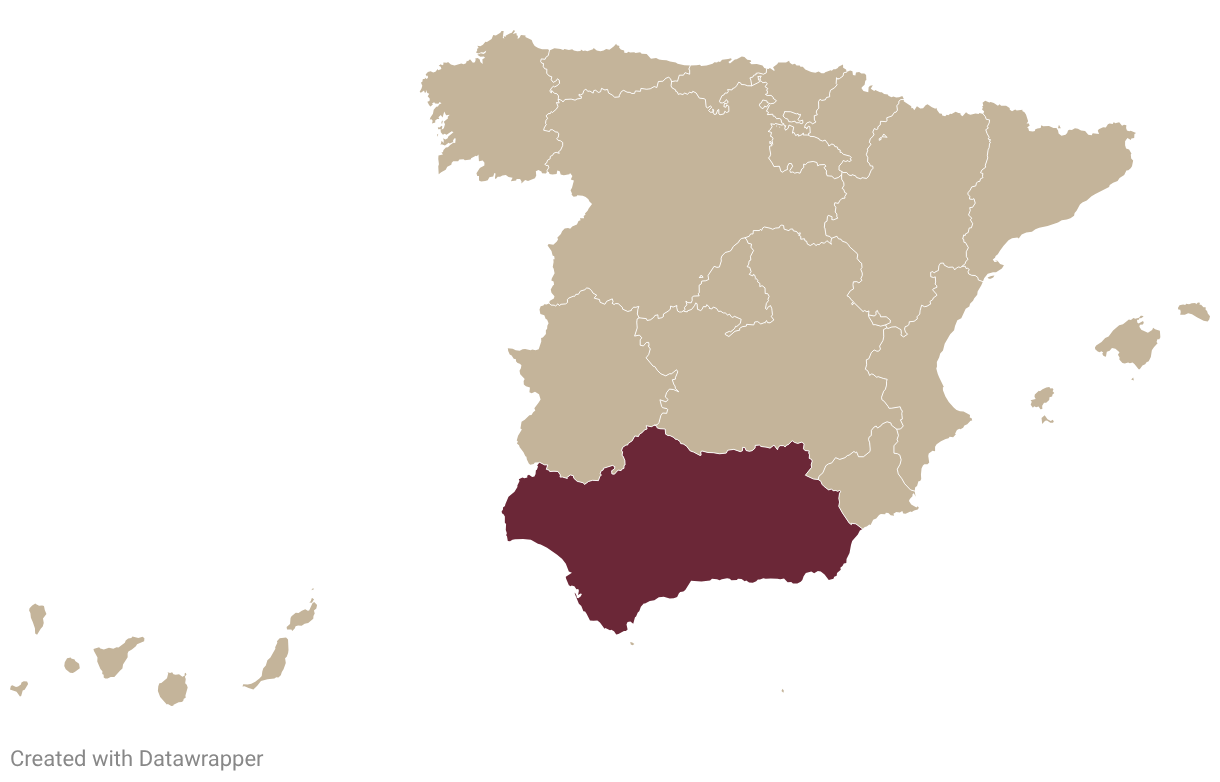
Sherry is wine’s great anomaly: a wine made in an unusual way, in an unusual place, from an unusual grape, that produces what many authorities consider the widest stylistic range of any single appellation on earth—from the palest, most delicate Fino to the darkest, most concentrated Pedro Ximénez, with a dozen distinct styles between them. The Jerez triangle in southwestern Andalusia—defined by the towns of Jerez de la Frontera, Sanlúcar de Barrameda, and El Puerto de Santa María—has been producing wine for at least 3,000 years, since Phoenician traders planted the first vines near modern-day Cádiz around 1100 BCE. The albariza chalk soils that define the region’s finest vineyard sites are among the most distinctive in viticulture: blindingly white, capable of absorbing winter rainfall and releasing it through the growing season, and partially responsible for the saline, mineral character that distinguishes Jerez wines from every other fortified tradition.
The solera system is what separates Sherry from every other wine tradition. Rather than bottling the wine of a single year, Sherry producers maintain a hierarchy of barrels called criaderas and a solera (from suelo, floor)—the oldest wine at the bottom, progressively younger wines in tiers above. When wine is drawn from the solera for bottling, it is replaced with wine from the first criadera, which in turn is replenished from the next, and so on up the chain. The result is a wine that contains fractional quantities of every vintage going back to the solera’s founding—some active soleras trace their origins to the 18th century—and that maintains a consistency of house style across decades that no single-vintage wine can replicate.
Fino and Manzanilla—the driest, most delicate styles—owe their character to flor, a naturally occurring film of yeasts that forms on the surface of wine in partially filled barrels, protecting it from oxidation while feeding on glycerol and alcohol. The result is a wine of striking freshness and precision: pale, bone-dry, with chamomile, green almond, and saline notes. Manzanilla, made exclusively in Sanlúcar de Barrameda where Atlantic influence keeps the flor healthier year-round, carries an additional marine salinity that makes it among the most distinctive and food-responsive wines produced anywhere. Both should be served cold, drunk young once opened, and paired with anything from olives to jamón to grilled seafood.
The oxidative styles—Amontillado, Palo Cortado, and Oloroso—represent the other face of Jerez winemaking. Amontillado begins its life under flor, but when the yeast veil dies or is deliberately removed through further fortification, oxidative aging takes over, creating wines of hazelnut, dried tobacco, and leather with a depth that can rival aged Burgundy in complexity. Oloroso, fortified to roughly 17–18% to prevent flor growth entirely, achieves dark walnut, dried fruit, and smoky intensity that deepens in the solera for decades. Palo Cortado—the rarest style, falling between Amontillado and Oloroso—combines the finesse of biological aging with the richness of oxidative development, and remains one of wine’s most sought-after anomalies.
Pedro Ximénez—made from sun-dried grapes of the same name—produces a wine so concentrated it pours with the viscosity of syrup: fig, date, molasses, dark chocolate, and a sweetness that old solera reserves balance with natural acidity accumulated over decades. Yet it is the dry styles, not the sweet, that are driving Jerez’s contemporary renaissance. A new generation of small-scale producers and revived almacenistas (stockholders who age and sell wine to larger houses) are bottling single-cask and limited-edition releases that are reaching collectors and sommeliers worldwide—commanding prices that would have seemed unthinkable a decade ago, and still representing strong value relative to their complexity.
“Sherry is, by any reasonable measure, the most underrated great wine in the world.”
— Hugh Johnson, Hugh Johnson’s Pocket Wine Book
The Styles
Three families of Sherry—each a distinct expression of Andalusian tradition, from the living yeast of Fino to the oxidative depth of Oloroso to the concentrated sweetness of Pedro Ximénez.
Prestige
Fino & Manzanilla
The biological aging styles: aged under a living film of flor yeast that produces chamomile, green almond, and briny saline notes. Manzanilla, made exclusively in Sanlúcar de Barrameda, adds Atlantic salinity that makes it among the most food-responsive wines produced anywhere.
Palomino Fino
Complex
Amontillado & Oloroso
The oxidative styles: Amontillado transitions from biological to oxidative aging, developing hazelnut, dried tobacco, and leather. Oloroso, fortified above 17% from the start, achieves dark walnut, dried fruit, and smoky intensity that deepens over decades in the solera.
Palomino Fino
Heritage
Pedro Ximénez & Cream
Sun-dried Pedro Ximénez grapes produce a wine of concentrated fig, date, molasses, and dark chocolate balanced by natural acidity. Old solera PX from houses like González Byass and Toro Albalá ranks among the most singular sweet wine experiences available.
Pedro Ximénez · Moscatel
Last updated: April 2026
Related Stories
The latest from TERROIR on Jerez, sherry traditions, and Andalusian wine.
The next one arrives Thursday.
Vintage intelligence, producer profiles, and curated cellar picks — before the critics weigh in. Weekly dispatch.