

The Atlas > Southern Hemisphere > South Africa
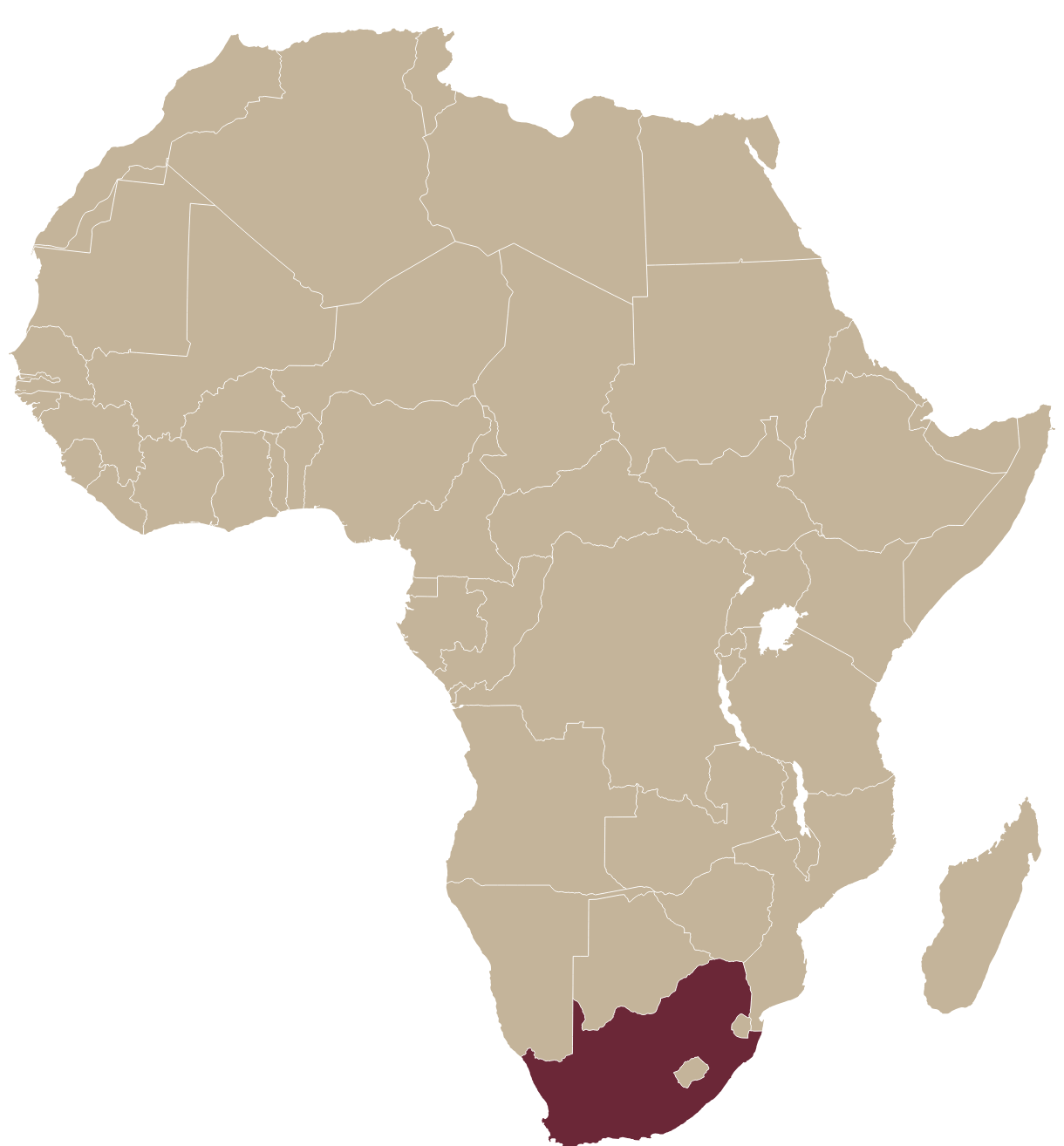
South Africa
Three and a half centuries of continuity, and a nation rewriting its wine story with Chenin Blanc as muse
28
·
8th
·
87K ha
·
1973
VARIETIES
Chenin Blanc · Pinotage · Cabernet Sauvignon · Syrah · Chardonnay · Cinsault
Jan van Riebeeck planted the first vines at the Cape in 1652 as an agricultural insurance policy—not romance, but pragmatism. The Dutch East India Company needed anti-scurvy provisions for its ships, and these founders of Cape Town treated the vineyard as a warehouse. But Governor Simon van der Stel sensed something else. In 1679, he founded Stellenbosch on the Eerste River’s fertile banks, and in 1685, he established Groot Constantia. That estate’s sweet Muscat wines became Napoleon’s table wine on St Helena and earned praise from Baudelaire. For three centuries, South African wine remained an isolated conversation—until apartheid-era sanctions and inward focus pushed it to the margins of the global trade. Then, in 1994, democratic transition reopened markets in a rush. South Africa’s wine industry did not gradually reintegrate with the world. It collided with it, suddenly vulnerable and suddenly visible.
What followed was not a simple story of catch-up. Instead, two parallel and often contradictory conversations emerged—each shaping the nation’s identity today. The establishment track gathered in Stellenbosch, where ambitious producers built Bordeaux-variety reds and structured Chardonnays to match Napa or Bordeaux on the world stage. That ambition was legitimate, grounded in terroir as distinctive as anywhere. But in the early 2000s, a different current emerged in the wheat plains north of Cape Town. Eben Sadie planted his first vines on Paardeberg mountain in 1999, dry-farming old-vine Chenin Blanc and Grenache on shale and granite with minimal winemaking intervention. Adi Badenhorst and Chris and Andrea Mullineux followed. They rejected the European playbook entirely—not because they lacked skill, but because they asked a harder question: What if South African wine didn’t need to imitate anywhere else?
Three Centuries, Two Revolutions
This tension—establishment versus experiment, tradition versus radical reimagining—remains South Africa’s most productive argument. Stellenbosch produces wines of genuine international standing: Kanonkop’s Pinotage, Meerlust’s Rubicon, Vergelegen’s Cabernets. Yet the Swartland’s insistence that South African wine could taste like itself, not like an expensive European wine in a cooler climate, fundamentally changed how the country understands its own potential. The two conversations have not merged. They coexist, challenge each other, and make South African wine more serious because of the tension.
South Africa’s vines themselves hold a historical weight that few New World regions can claim. Some ungrafted vines planted before 1900 still produce in Swartland and Paarl—their deep root systems adapted to drought conditions, reaching moisture far below the surface where younger rootstock would expire. These are among the world’s oldest cultivated vines, genetic memory encoded in their wood. When you drink a Swartland Chenin from a 1920s planting, you are tasting continuity that spans centuries and continents.
The country’s trump cards are three-fold, and they matter in different ways. First, the old vines themselves: survivors of phylloxera, of apartheid, of historical isolation. Second, Chenin Blanc. South Africa grows more of this variety than France’s Loire Valley, and the Cape’s best examples—mineral, beeswax-rich, capable of genuine aging—have rewritten what the world believed Chenin could be. The Loire produces wines of ethereal delicacy; Cape Chenin achieves a richer, broader architectural complexity. Third, Walker Bay, Elgin, and Elim. These cool-ocean terroirs produce Pinot Noir and Chardonnay that rivals the best New World examples, from latitudes and ocean influences no other Southern Hemisphere region quite matches.
What the Vines Remember
The post-1994 story is also a story of transformation that remains incomplete. When South African wine reentered global markets, the country was remaking its political and social identity. The wine industry has not been immune to those challenges. Land reform, water scarcity (Day Zero in 2018 pushed Cape Town to the edge of catastrophe, and water remains contested), and labor equity in an historically unequal industry remain unresolved tensions. Yet wine has also become a site of genuine progress—Black-owned estates emerging, women producers reshaping regions, young winemakers returning from Europe with technical skill but refusing European ideology.
This is why South African wine matters now not because it competes with Bordeaux or Burgundy, but because it asks questions neither region needs to ask anymore. What does continuity look like when it has been interrupted? How do you honor old vines while building something new? What does wine taste like when it insists on speaking in its own voice rather than an adopted accent? Stellenbosch answers these questions one way; Swartland another. Both are right, and their disagreement is the engine of South Africa’s finest work.
“The Cape has eclipsed the Loire Valley as the source of the world’s best dry Chenin Blancs.”
— Tim Atkin MW, South Africa Special Report
The Regions
South Africa’s three major regions span from the established classical traditions of Stellenbosch to the raw innovation of Swartland and the cool-climate maritime precision of Walker Bay—each a chapter in a nation rewriting its wine story.
Premier
Stellenbosch →
Three and a half centuries of tradition meet conservative excellence. Cabernets and Chenins — structured, mineral-driven, age-worthy.
Cabernet Sauvignon · Chenin Blanc · Chardonnay · Merlot
Emerging
Swartland →
South Africa’s natural-wine rebellion. Hot, windswept, minimal-intervention Chenin and Grenache that taste of earth and defiance.
Chenin Blanc · Grenache · Syrah · Cinsault
Major
Walker Bay →
Where two oceans meet and Pinot Noir found an unexpected home. Cool-climate terroir and the courage to discover it.
Pinot Noir · Chardonnay · Sauvignon Blanc · Chenin Blanc
Last updated: April 2026
Related Stories
TERROIR’s coverage of South African wine.
The next one arrives Thursday.
Vintage intelligence, producer profiles, and curated cellar picks — before the critics weigh in. Weekly dispatch.